
Samsung Galaxy XR headset marks a bold step into mixed reality — redefining Korea’s global leadership in spatial computing and AI innovation.
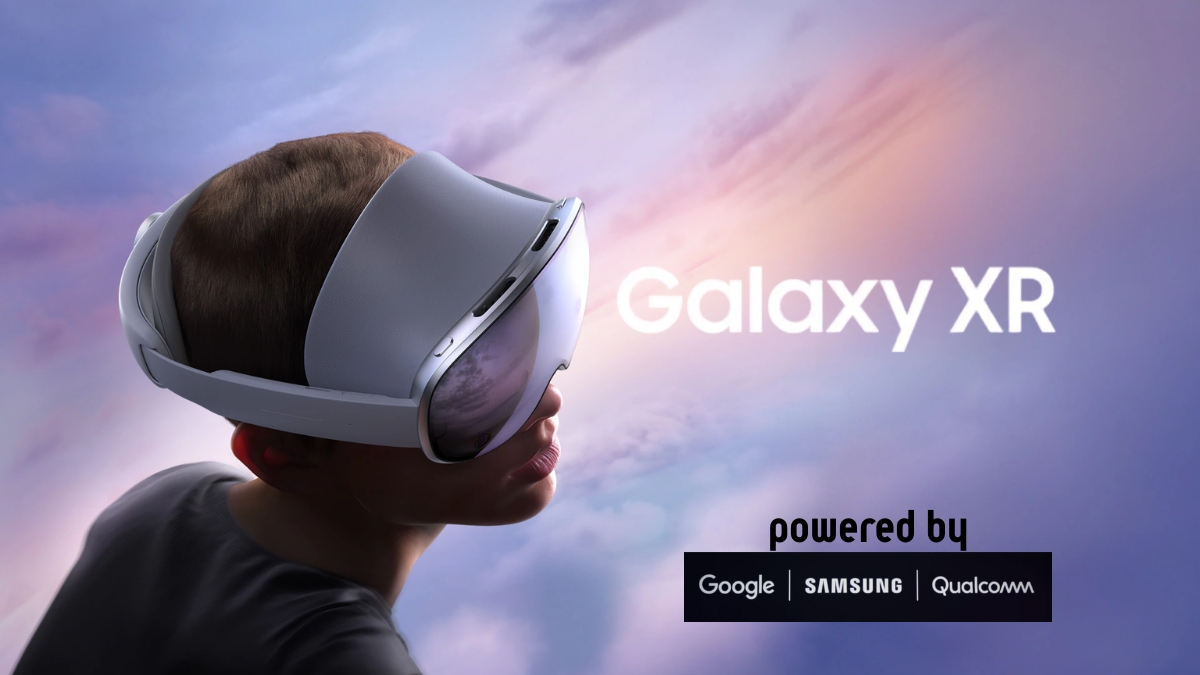
With smartphones reaching their innovation limits, Samsung Electronics is searching for its next big growth engine. Its answer is the Galaxy XR — a mixed-reality headset designed to bridge the digital and physical worlds. More than a product launch, it marks Samsung’s evolution from a hardware manufacturer into an integrated experience platform.
Galaxy XR expands the vision for mobile AI into a new frontier of immersive and meaningful possibilities. This device moves XR from concept to everyday reality for both industry and users.
Choi Won-joon, Chief Operating Officer of Samsung’s MX Business
The Galaxy XR brings together Samsung’s strengths in displays, semiconductors, and artificial intelligence, positioning Korea at the forefront of the global spatial-computing race. With this move, Samsung is not only challenging Apple and Meta but also building the foundation for a new ecosystem of immersive productivity, communication, and content experiences.
Samsung’s Strategic Leap Beyond Smartphones
For over a decade, smartphones have powered Samsung’s rise to the top of the global electronics market. Yet with mobile growth flattening, the company has been preparing for its next wave of innovation.
Wearables, foldables, and AI-driven devices were stepping stones. The Galaxy XR is the boldest leap yet — merging Samsung’s established device ecosystem with the fast-emerging field of extended reality (XR). This technology blends physical and digital experiences through immersive displays, intuitive control, and AI-based assistance.
By entering XR now, Samsung is signaling a shift toward a post-mobile era — one where screens give way to spaces, and devices merge seamlessly with the user’s environment. It’s also a message to the global market that Korea intends to lead not only in hardware, but in the next interface of computing.
Technology Foundation – Powering the Samsung Galaxy XR Ecosystem
At its core, the Galaxy XR combines precision engineering with intelligent software. The headset uses dual micro-OLED displays that deliver more than 3,800 × 3,500 pixels per eye, ensuring high contrast and vivid clarity. It runs on Qualcomm’s Snapdragon XR2+ Gen 2 processor, supported by 16 GB of RAM and 256 GB of storage, enabling demanding spatial applications.
The device operates on Android XR, a platform co-developed with Google. This collaboration allows existing Android apps to adapt to spatial interfaces while enabling developers to build immersive experiences from the ground up. Interaction is fluid — users can control the system through eye-tracking, hand gestures, or voice commands powered by Gemini AI, Google’s multimodal assistant.
Samsung’s vertically integrated supply chain gives the project a major advantage:
- Samsung Display builds the micro-OLED panels.
- Samsung SDI supplies the external battery system.
- Electro-Mechanics from Samsung provides sensors and optics.
This synergy keeps production efficient, strengthens supply resilience, and ensures the core value creation remains within Korea — reinforcing its global reputation for technology leadership.
Unlike earlier XR devices, the Galaxy XR was designed from the ground up as an AI-native headset. Its built-in Gemini assistant interprets the environment in real time. When a user looks at a photo or landmark, Gemini provides instant context or directions without any extra command. This “see, hear, and respond” capability shifts the device from a display to a companion.
The headset’s open developer framework supports OpenXR, WebXR, and Unity, giving creators freedom to build XR-specific experiences on top of Android XR.
Business Ecosystem – Partnerships and Value Chain
The Samsung Galaxy XR is not a standalone device; it’s the centerpiece of a collaborative platform strategy.
Samsung’s partnership with Google and Qualcomm forms the backbone of this initiative. Samsung leads on hardware design and ecosystem integration. Google contributes the Android XR software platform, enabling seamless app and service expansion. Qualcomm delivers the optimized chipset that powers smooth, low-latency experiences.
Together, these partners form a triangular innovation network, a model that reflects how Korean industries often succeed — through strategic collaboration that accelerates product maturity.
Meanwhile, Korea’s local supplier ecosystem is gaining momentum. Samsung Display, SDI, and domestic optics companies are scaling up to support micro-OLED panels and advanced sensors. This domestic production model enhances both competitiveness and Korea’s position as a global manufacturing hub for XR hardware.
Beyond hardware, the Galaxy XR opens opportunities for new business models. Samsung plans to foster a developer marketplace for Android XR, encouraging content creation across entertainment, education, and design. The company is also exploring collaborations with Korean media and gaming studios to produce 3D cultural and K-pop experiences that highlight Korea’s creative influence.
From a business standpoint, XR expands Samsung’s reach into enterprise and industrial markets. Companies can use the headset for design visualization, remote collaboration, and workforce training. In healthcare and education, realistic simulations and 3D environments offer powerful new tools. This transition moves Samsung toward a recurring service and content-based revenue model — a key step in diversifying beyond hardware sales.
Beyond consumer markets, Samsung is already testing industrial use cases. Samsung Heavy Industries plans to deploy Galaxy XR headsets in virtual shipbuilding simulations, showing how XR can improve design accuracy and worker training before large-scale production.
Market Outlook – Competing in the Mixed Reality Economy
The timing of Samsung’s entry into XR is strategic. Global demand for spatial-computing devices is accelerating, with analysts predicting the market could exceed USD 100 billion by 2030. While Apple and Meta led early experiments, Samsung arrives with stronger ecosystem integration and a broader product pipeline.
Priced at 2.69 million won (≈ USD 1,800), Galaxy XR costs roughly half as much as Apple’s Vision Pro (USD 3,500). This pricing strategy positions it squarely between Meta’s Quest series and Apple’s luxury model — premium enough to showcase innovation but accessible enough for professionals and early adopters.
Market data underscores the challenge: Meta currently holds about 70 percent of the global XR headset market, while Apple’s share remains modest. Meta also dominates the smart-glasses category, commanding 73 percent share through its Ray-Ban collaboration, according to Counterpoint Research. Samsung’s entry therefore, represents both opportunity and an uphill climb.
Early impressions from industry reviewers highlight the clarity of the display and comfort of the fit, especially during extended sessions. Although battery life averages around 2.5 hours, the external pack design helps reduce weight and improve balance.
Samsung’s go-to-market plan focuses on practical adoption. For professionals, the headset serves as a virtual multi-screen workspace. For consumers, it enables immersive streaming, social experiences, and creative tools. This dual-market strategy allows Samsung to diversify revenue streams while extending its Galaxy ecosystem across phones, tablets, and TVs.
In competitive terms, success will depend on three factors:
- Developer engagement in building XR-native apps.
- Software optimization for performance and comfort.
- Clear communication of real-world use cases.
If Samsung delivers on these fronts, it can secure a strong foothold in the growing mixed-reality economy — and lead Korea’s next major wave of tech exports.
Strategic Implications – The Road Ahead for Samsung and Korea
The Samsung Galaxy XR marks a defining moment in Samsung’s transformation. For decades, the company’s strengths lay in displays, chips, and smartphones. Now, those assets converge into a spatial computing vision — one that could shape how humans interact with information in 3D environments.
Samsung sees Galaxy XR as the first step toward AI-powered glasses that merge technology and fashion. The company has already partnered with Warby Parker and Gentle Monster to design lightweight eyewear capable of running on its AI ecosystem. These collaborations suggest that Samsung intends to move XR from headsets to everyday wearables — a shift that could mainstream AI assistance the same way smartphones once did.
For Samsung, XR establishes a new business vertical aligned with its AI-driven ecosystem strategy. The company aims to connect all Galaxy devices — from phones to smart TVs — through spatial interfaces enhanced by artificial intelligence.
For Korea’s tech ecosystem, the impact extends far beyond Samsung. Demand for advanced sensors, optics, and micro-displays will stimulate local industries. Startups specializing in XR content, gesture control, and simulation software will find new opportunities. Government initiatives under the Digital Korea program may also integrate XR into smart-manufacturing, defense, and education sectors.
This expansion strengthens Korea’s global innovation profile. By adding immersive technology to its portfolio of exports — alongside semiconductors and EV batteries — Korea can position itself as a complete technology ecosystem.
Looking forward, Samsung’s long-term success will rely on steady R&D investment, developer support, and open ecosystem governance. If executed well, the Galaxy XR could become not just a new device line, but a strategic milestone for the “K-Tech” movement — where Korean engineering and creativity define the future of human–digital interaction.
Conclusion
The Galaxy XR represents more than Samsung’s entry into mixed reality. It reflects Korea’s evolution into the era of immersive, AI-powered technologies. As global tech firms race to define what comes after smartphones, Samsung’s strategy — built on collaboration, innovation, and national capability — gives it a decisive advantage.
If the Galaxy S series defined Samsung’s mobile decade, the Galaxy XR could define its spatial decade — one where Korean technology moves beyond devices and becomes the architecture of digital experience itself.
At a Glance
- Product: Samsung Galaxy XR
- Platform: Android XR (co-developed with Google)
- Chipset: Qualcomm Snapdragon XR2+ Gen 2
- Price: Approx. USD 1,800
- Core Focus: Mixed reality, AI integration, and ecosystem synergy
- Strategic Impact: Positions Korea as a leader in the spatial-computing era
- Website: https://www.samsung.com/sec/xr/galaxy-xr/galaxy-xr/
Market by the Numbers
- Price: 2.69 million KRW (~USD 1,800)
- Competitors: Apple Vision Pro (USD 3,500) | Meta Quest 3 (USD 499)
- Market Share (2025): Meta 70% (XR headsets), 73% (smart glasses)
- Projected Market Size: USD 261.9 billion by 2034 (Source: Precedence Research)
Join us on an exciting journey to explore the vibrant world of Korean lifestyle – from the latest beauty tips to the hottest tech and so much more on Facebook, Twitter, LinkedIn, and Flipboard.