
Korean brands are turning memory into market power. From Samyang 1963 to Fila and Amorepacific, discover how the nostalgia economy in Korea blends heritage, emotion, and innovation.
The Paradox of Progress
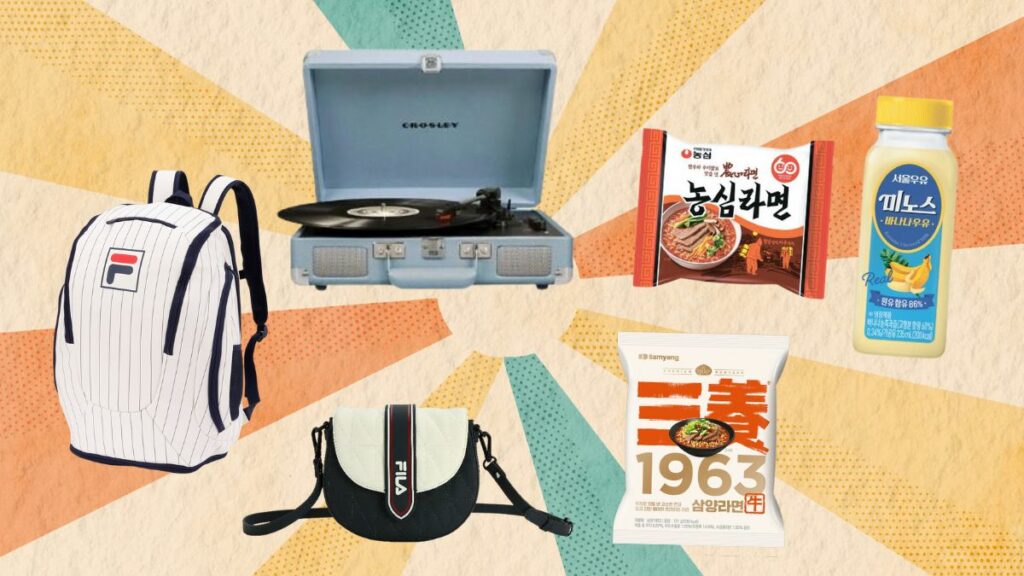
In one of the world’s most futuristic nations, the biggest consumer trend is looking backward. Korea’s most talked-about launches today are not new technologies or flavors but revivals of old ones — ramen from 1963, milk bottles from 1974, and sneakers from the 1990s.
This paradox defines Korea’s nostalgia economy, where memory drives markets and emotion becomes currency. The country’s newtro movement — a blend of “new” and “retro” — has grown from a design aesthetic into a commercial strategy that spans food, fashion, technology, and beauty.
Why are consumers in a hyper-digital society drawn to analog warmth? The answer lies in psychology, culture, and economics. Nostalgia has become Korea’s most human response to rapid modernization — and one of its most effective marketing tools.
The Psychology of Nostalgia: Comfort in the Familiar
Nostalgia is emotional self-preservation. During times of uncertainty, people instinctively seek what feels safe and familiar. In Korea — where social pressure, digital fatigue, and economic competition run high — nostalgia provides emotional balance.
Academic research in Korea confirms this effect. A study on “newtro” package design found that familiarity, attractiveness, and uniqueness each have a positive impact on purchase intention. In other words, consumers are not just moved by memory; they act on it.
This explains why brands like Samyang Foods and Amorepacific successfully revive products from earlier decades. The familiarity of a taste, logo, or scent signals stability in a volatile world. Nostalgia slows time, allowing people to reconnect with moments that felt genuine and shared.
Memory in a Modern Nation
Few societies have changed as fast as South Korea. In two generations, the country went from war recovery to global innovation leader. That acceleration created prosperity — and a longing for what was left behind.
By the 1980s, the rhythm of daily life had shifted from communal to corporate, from handwritten signs to digital displays. For many, nostalgia represents an anchor to human scale and texture. Millennials and Gen Z, though they never lived through those decades, romanticize them through vintage cafés, film cameras, and vinyl records. For older generations, nostalgia revives lived memory; for younger ones, it offers authenticity in an algorithmic world.
This shared emotional landscape unites Koreans across age groups. Nostalgia has become a bridge between generations — proof that in a society defined by reinvention, continuity still matters.
Marketing Insights: Nostalgia as Emotional Currency
For marketers, nostalgia is more than aesthetics; it is a shortcut to trust. In a crowded market, recognition feels like relief. A retro wrapper or revived slogan instantly communicates reliability — the assurance that a brand has endured.
That familiarity translates into measurable results. Globally, 75 percent of consumers say they are more likely to buy a product when advertising evokes nostalgia, and campaigns using nostalgic packaging report an average 16 percent sales lift. In Korea, where emotional branding is particularly influential, the effect is amplified by collective memory and cultural pride.
Nostalgia also enables premium pricing. Consumers willingly pay more for brands tied to heritage because they perceive quality and craftsmanship. Samyang 1963’s beef-tallow ramen, Amorepacific’s vintage skincare, and Innisfree’s heritage lines all trade on emotional credibility.
Online, nostalgia drives engagement. TikTok trends featuring 1990s K-pop or analog visuals consistently perform better than contemporary themes. For Korean marketers, emotion has become data — and memory, a measurable metric of success.
The Economics of Nostalgia: How Memory Drives Markets
Behind every retro logo or vintage relaunch is a business model that works. In Korea, nostalgia has become an economic multiplier, improving marketing efficiency, stabilizing sales, and expanding brand longevity.
Heritage-driven products consistently outperform newer launches in times of uncertainty. Consumers find comfort in familiar names, making nostalgia a form of brand insurance. According to a March 2025 Chosun Ilbo report, companies such as Nongshim, Maeil Dairies, and Seoul Milk are relaunching discontinued products to take advantage of this dynamic. These revivals lower research and marketing costs while benefiting from built-in recognition and trust.
Quantitative evidence supports the trend. A Korean study on newtro packaging found that familiarity, attractiveness, and uniqueness directly increase purchase intent, proving that emotional design also delivers measurable business outcomes. Globally, nostalgia marketing generates a 16 percent average sales lift, and three-quarters of consumers say they are more likely to buy when an ad evokes nostalgic feelings.
Premium positioning further amplifies returns. Korean ramen like Samyang 1963’s higher price point commands extra value because it blends authenticity with credibility. In a crowded market that rewards novelty, nostalgia has become a low-risk, high-return strategy — a rare intersection of efficiency and emotion.
If nostalgia has proven its economic power at home, its emotional language is now shaping how Korea connects with the world.
Global Reach: Exporting Korean Nostalgia
Beyond Korea’s borders, nostalgia has evolved into cultural capital. As K-culture reshapes global taste, heritage-inspired Korean brands are finding enthusiastic audiences who see them as symbols of authenticity rather than artifacts of the past.
Korean products reviving the retro from brands like Samyang, Nongshim, Orion, and others are now sold worldwide as touchpoints of everyday Korean life. On TikTok and YouTube, international creators review vintage-style K-snacks and beauty products, turning memory into shareable emotion. What once evoked personal recollection now functions as a collective cultural story.
Fashion and beauty have followed suit. Whether it is Fila featuring the 90s classics through Heritage Collection or New Jeans flaunting the Y2K fashion, all export Korea’s refined nostalgia. They blend restraint, craftsmanship, and design storytelling. These products carry a distinctly Korean sense of memory: one rooted not in individual youth culture, as in the West, but in collective identity and national resilience.
This difference gives Korea nostalgia global resonance. It offers warmth, modesty, and emotional honesty — qualities that distinguish it from the flashier nostalgia cycles of Western brands. Through this quiet confidence, Korea is exporting more than consumer goods; it is exporting feeling. Nostalgia has become one of the country’s most subtle yet powerful forms of soft power, linking its cultural past to a global future.
Conclusion: Memory as Modern Value
The nostalgia economy in Korea proves that progress and memory can move in tandem. In a nation defined by speed, the familiar has become its emotional anchor.
Consumers turn to the past not to escape the present but to humanize it. Brands respond by transforming heritage into strategy — reviving authenticity in a marketplace driven by change. Products like Samyang 1963, Fila Heritage, and Amorepacific Vintage show that continuity itself is innovation.
By transforming memory into a tool for growth, Korea demonstrates that the future of branding lies not only in invention but in remembrance. Nostalgia is no longer a sentimental glance backward; it is one of Korea’s most modern values — and its most enduring competitive advantage.
Join us on an exciting journey to explore the vibrant world of Korean lifestyle – from the latest beauty tips to the hottest tech and so much more on Facebook, Twitter, LinkedIn, and Flipboard.