
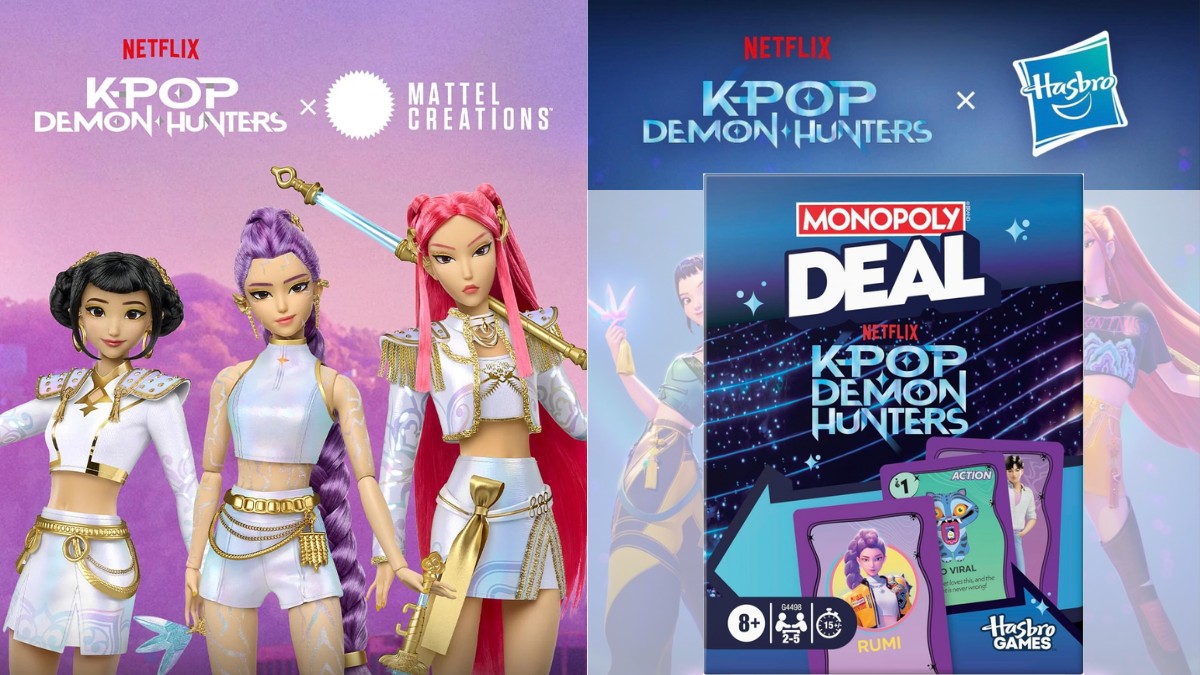
Netflix’s KPop Demon Hunters has evolved from a breakout animated hit into one of the most consequential entertainment franchises of 2025 — and its expansion into physical products with industry titans Mattel and Hasbro marks a strategic shift worth close attention. This isn’t mere licensing hype: the partnership reflects a deep convergence of K-content, fan engagement, and global consumer markets that could redefine how streaming IP translates into merchandise success.
A First-of-Its-Kind Dual Toy Licensing Model
In October 2025, Netflix announced that both Mattel and Hasbro have been named global co-master toy licensees for KPop Demon Hunters — an unprecedented move in the toy and entertainment sectors. Traditionally, toy rights for a given franchise are granted to a single licensee; Netflix’s dual agreement signals confidence in market demand and a willingness to broaden retail reach across toy categories.
What Products Are Coming — and When
Mattel
- Will develop a comprehensive product line including dolls, action figures, collectibles, accessories, and playsets based on core characters Rumi, Mira, and Zoey.
- A pre-order launch for the HUNTR/X doll 3-pack went live on Mattel Creations on November 12, 2025, with shipment slated for 2026.
Hasbro
- Is set to deliver plush toys, youth electronics, role-play items, and games, including Monopoly Deal: KPop Demon Hunters — available for preorder and shipping January 1, 2026.
- Their offerings aim to extend play experiences beyond figures into interactive, game-driven engagement.
Together, these lines are expected to hit major retail shelves in Spring 2026 — strategically timed for the global toy season and the franchise’s continued cultural momentum.
Why This Matters: Cultural Force Meets Consumer Commerce
At face value, branded toys for a hit Netflix movie might seem predictable — but the context here reveals strategic innovation.
1. Streaming Success That Defies Expectations
KPop Demon Hunters began streaming on June 20, 2025, and quickly became Netflix’s most-watched original title ever, with over 325 million views during its initial 91-day tracking window — a staggering achievement that *surpassed Squid Game and Red Notice to occupy the top spot.
The film also saw a limited theatrical sing-along release that grossed more than $18–19 million in the U.S. and Canada, making it the first Netflix movie to top box office charts during a special engagement.
This viewership trajectory matters because it reflects unusually deep audience engagement for a non-franchise IP — and that engagement directly fuels demand for merchandise beyond digital screens.
2. Music That Breaks Boundaries
The KPop Demon Hunters soundtrack — released alongside the film — achieved critical and commercial success:
- Songs from the album appeared simultaneously in the Billboard Hot 100 top-10, a rare achievement for a soundtrack.
- Tracks like “Golden” hit No. 1 on the Billboard Hot 100, underscoring the fictional group Huntr/x’s tangible impact on real-world charts.
This music-driven cross-media impact explains why toy companies — traditional physical product players — are eager to partner at scale.
3. The Age of Global K-Content
Beyond metrics, KPop Demon Hunters represents the next wave of global Korean content — one that blurs boundaries between animated film, music fandom, gaming culture, dance, and storytelling. Recognitions such as Golden Globe nominations for Best Original Song (“Golden”) further cement the property’s cultural resonance.
Products in Focus: From Dolls to Games
Here’s a snapshot of early confirmed offerings:
| Product Type | Partner | Status |
|---|---|---|
| HUNTR/X Dolls & Collectibles | Mattel | Pre-orders live (Nov 2025); shipping 2026 |
| Plush & Electronics | Hasbro | Planned 2026 |
| Monopoly Deal: KPop Demon Hunters | Hasbro | Pre-order; ships Jan 1, 2026 |
| Expanded Playsets & Themed Games | Mattel & Hasbro | Rolling releases 2026+ |
These offerings are not just playthings — they represent a broader commercial ecosystem around the franchise, giving fans ongoing ways to engage with characters and narratives beyond the screen.
Longer-Term Implications for IP & Toy Markets
Netflix’s dual licensing strategy could reshape how media companies approach merchandise licensing:
- Risk diversification: Two licensees mean broader category coverage without overwhelming one partner.
- Creative synergy: Mattel’s design expertise combines with Hasbro’s game and interactive strengths, appealing to both collectors and younger players.
- Market signaling: This move signals confidence in KPop Demon Hunters as a lasting franchise, not a one-off streaming success.
For Korea’s entertainment exporters and domestic toy markets, the Netflix example underscores that storytelling IP can now launch directly into global consumer ecosystems with unprecedented scale.
Conclusion: A Blueprint for Future Media Franchises
Netflix’s KPop Demon Hunters is more than a streaming hit — it’s become a global cultural anchor with robust viewership, chart-topping music, and now, an expansive merchandise strategy powered by industry leaders. With verified success figures and a coordinated rollout of toys and games starting in 2026, the franchise offers an early glimpse into how entertainment IP can holistically bridge digital and physical fan experiences — and why global partners like Mattel and Hasbro believe that the fans want more than just a screen story.
Join us on an exciting journey to explore the vibrant world of Korean lifestyle – from the latest beauty tips to the hottest tech and so much more on Facebook, Twitter, LinkedIn, and Flipboard.