
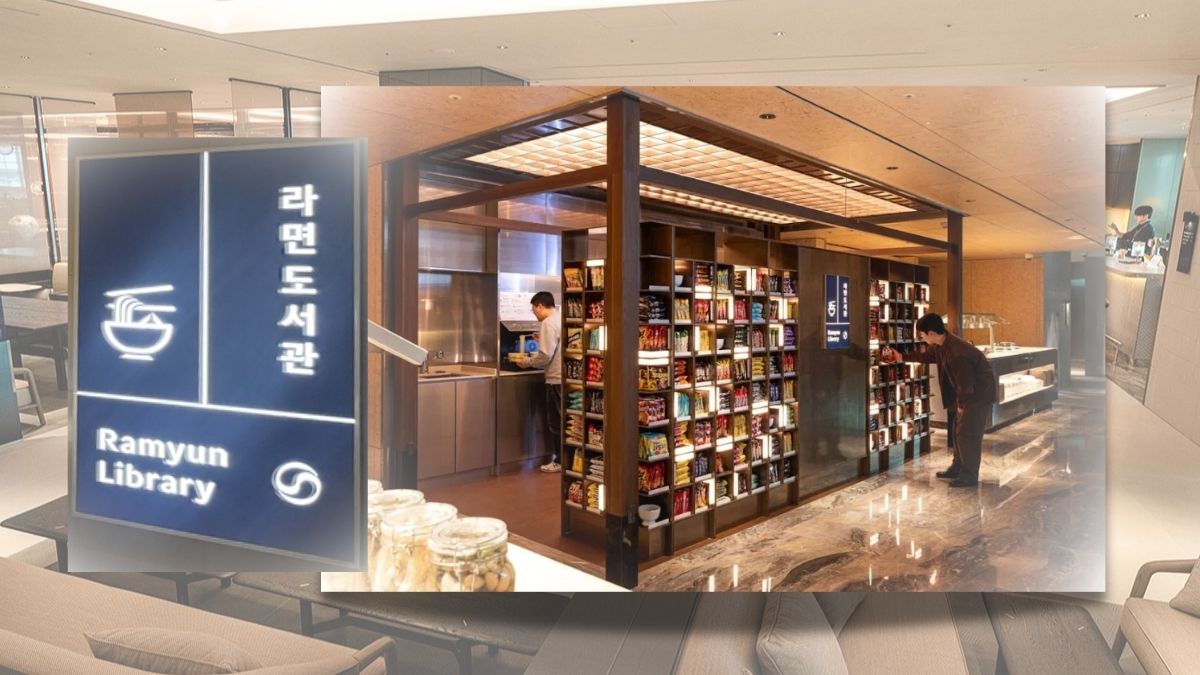
On January 14, 2026, Korean Air officially opened its renovated Prestige East (Left) Lounge at Incheon International Airport’s Terminal 2. While the headlines focused on the “Ramyeon Library”—a 14-variety self-service noodle station—the real story for business analysts lies in the sophisticated interplay of operational automation, labor hedging, and post-merger brand consolidation.
This 1,553-square-meter facility is not merely a rest stop; it is a high-signal template for the future of global aviation hospitality.
Hedging the 2026 Labor Crisis
Korean Air is using “Participatory Luxury” to maintain premium service levels despite South Korea’s shrinking hospitality workforce. By automating meal preparation through a self-service ramen library, the airline reduces overhead while increasing passenger engagement.
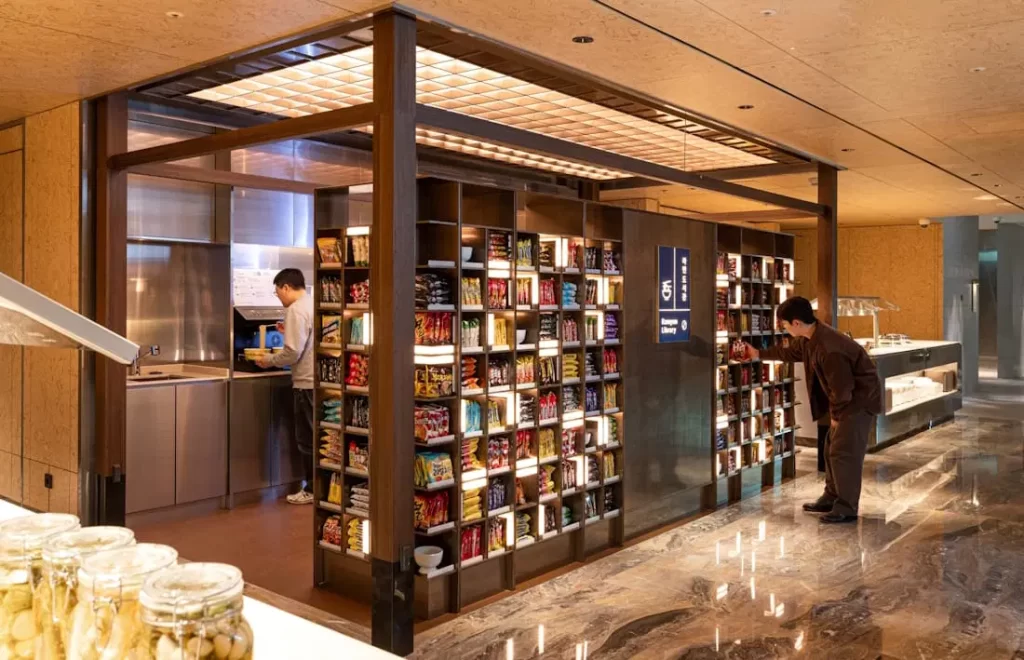
In 2026, the South Korean service sector faces a critical labor shortage. Flagship carriers can no longer rely solely on labor-intensive, white-glove buffets to serve thousands of daily transit passengers. The Ramyeon Library solves this by shifting the “labor” of preparation to the guest. By pairing a curated wall of Ottogi brands with automated induction cookers, Korean Air provides a high-delight, consistent ritual that requires zero kitchen staff to execute.
For founders, the signal is clear: Automation is no longer a cost-cutting measure; it is the only way to sustain 24/7 premium service in a labor-constrained economy.
The Asiana Merger Endgame
The expansion of the Prestige East Lounge to 1,553 square meters is a direct response to the $2 billion Korean Air-Asiana merger finalized in early 2026. As Asiana’s Terminal 1 operations are phased out, Terminal 2 must absorb a massive influx of premium transit traffic.
By increasing the total lounge footprint to 12,270 square meters, Korean Air is positioning Incheon as the “Mega-Hub” of Northeast Asia. This facility isn’t just a waiting room; it’s a “Content Hub” designed to unify the two airlines’ distinct customer bases under a single, high-energy K-Brand identity.
| 2026 Strategic Metric | Data Point | Business Signal |
| Total Lounge Area | 12,270 sqm | 2.5x increase to dominate regional transit |
| Seating Capacity | 1,566 Seats | Strategic buffer for Asiana passenger absorption |
| Footprint Growth | 2.5x Increase | Dominance over the Northeast Asian transit |
| Digital Layer | Real-time Crowd Monitoring | Data-driven traffic management |
| Experiential Variety | 14 Ramyeon Brands | Cultural “soft power” as a service |
| Location | Gate 253 (T2) | Centralized premium hub for “Phase 4” airport expansion |
Driving the “Inbound 20M” Goal
The lounge serves as the “First and Last Impression” for the Ministry of Culture, Sports, and Tourism’s “2026 Korea Visit Year.” With a target of 21 million inbound tourists, the airport experience is a vital marketing touchpoint.
Statistics indicate that travelers are 30% more likely to choose a transit hub based on layover quality. By offering the Cooking Studio L’atelier—where Grand Hyatt Incheon chefs lead 15-minute classes—Korean Air is leveraging “High-Touch” human talent where it matters most (emotional engagement) while automating the high-volume basics (dining).
Why is Incheon beating Changi and Doha?
The global competition between transit hubs is shifting from Passive Luxury (gardens and quiet zones) to Active Engagement. While Singapore’s Changi focuses on the “Jewel” ecosystem, Incheon is doubling down on “Experiential K-Culture.”
The Ramyeon Library and Arcade Rooms cater to the Gen Z and Millennial premium traveler who values “doing” over “having.” This strategic pivot ensures that Incheon remains the primary gateway for the $11.4B K-Beauty and K-Food export engines we previously analyzed.
Join us on an exciting journey to explore the vibrant world of Korean lifestyle – from the latest beauty tips to the hottest tech and so much more on Facebook, Twitter, LinkedIn, and Flipboard.