
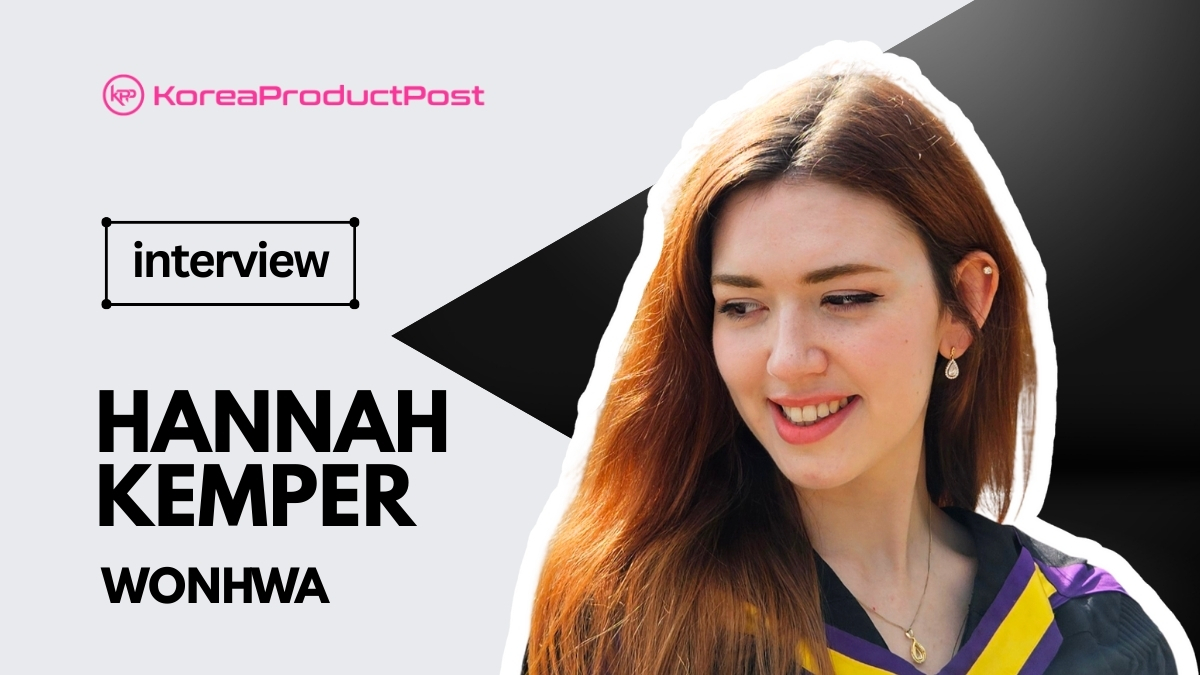
Korean beauty continues to establish itself as a global leader in skincare and cosmetics, with its influence expanding well beyond Asia and North America. The UK market is now catching up at an impressive pace, driven by increasing consumer demand for innovative formulations and holistic self-care practices. At the heart of this growing movement is Hannah Kemper, founder of WONHWA, a UK-based platform that connects Korean beauty brands with local influencers and consumers. And in this candid conversation, she shares her journey from discovering K-beauty as a teenager in Europe to building a business that bridges cultures, educates consumers, and brings authentic Korean beauty experiences to the UK.
Bridging Cultures Through Skincare – Hannah Kemper’s WONHWA Story
Hannah Kemper’s story shows that K-beauty is not just skincare, but a language of self-expression, cross-cultural exchange, and global community.
As WONHWA connects Korean brands with UK influencers and consumers, the lesson is clear: beauty isn’t just about products, it’s about authentic stories, education, and community. K-beauty’s next chapter in the UK is not just a trend — it’s a transformation.
Early Journey into K-Beauty
Q: Let’s start with your journey. How did you first become interested in K-beauty?
Hannah: It’s a funny story. Growing up, I didn’t feel very British because I spent most of my childhood outside the UK, attending international schools in Europe.
When I was in Hungary, I met a Japanese girl who became my best friend. I fell in love with J-dramas and the Japanese language. Later, in Romania, I met a Korean girl who introduced me to the K-world. Then, in Germany, my best friend was Korean, Jinsol, who is still my best friend 14 years later.
Every summer, she went back to Korea. One year, she brought me what I thought was a box of tissues. She explained they were sheet masks, and her younger sister had used them daily to clear up her skin. I had terrible acne on my face, chest, shoulders, and back, so I was amazed.
Strangely, I never used them. I loved having them, but didn’t want them to run out. Eventually, they dried up. Luckily, my love for K-beauty didn’t dry out with those masks. That was around 2009, my first real introduction to K-beauty.
From Passion to WONHWA
Q: You had experiences with both J-beauty and K-beauty. Why did K-beauty become your focus?
Hannah: I think it was a natural progression. I’ve always admired J-beauty, too; my Japanese friend had amazing skin. But my closest friends were Korean, and they kept introducing me to Korean culture and beauty. That’s where the deeper connection formed.
Q: How did this passion eventually turn into WONHWA?
Hannah: Before launching WONHWA, I was nervous. Once I launched and shared it, people said, “Of course, this makes sense.” But at the time, it was nerve-wracking. During my undergrad, I spent a year in Korea as an exchange student. I met the founder of AGASKIN and K-World Media and began working with her, helping the company grow. It shifted more into beauty, and I became part of that.
By around 2019, I was already working in K-beauty in different roles. In 2022, I realized this is exactly what I want: K-beauty and marketing.
As a woman in business, imposter syndrome was a big concern. I wanted to feel confident answering any question and not feel like a fraud. So, I came back to the UK, completed a Master’s in digital marketing, and continued working for K-World Media and AGASKIN.
After graduating, I returned to Korea briefly, but visas are challenging. By January of this year, I returned to the UK. My parents encouraged me to create the role I wanted. They said, “You have the knowledge, the passion, and the experience. If you don’t do it now, you’ll regret not starting earlier.” That push gave me the courage to start WONHWA.
WONHWA’s Mission and Model
Q: For those unfamiliar, how would you describe WONHWA’s mission?
Hannah: At its simplest, we connect the best UK influencers with the best Korean beauty brands. The core is connection, benefiting everyone.
K-beauty is an experience. It should be lived, felt, smelled, and touched.
– Hannah Kemper, CEO WONHWA
I want to create authentic relationships between brands and influencers so people can truly understand the stories and missions behind the products.
To me, skincare isn’t about perfection; it’s about taking time for yourself, whether you have a 10-step routine or just a couple of products.
Q: How do you decide which brands to work with? Or do they approach you?
Hannah: It’s a mix of both. I already had strong contacts with Korean brands, so I knew some of their marketing needs. I approach brands I believe in, because I have to genuinely support them to share them.
Mixsoon, for example, is one of my favorites. They have a strong mission, support good causes, and their products truly work.
At the same time, some brands approach me. They’re not always ready for the UK market, but I help them adapt, deciding which products to push, how to position themselves, and what pain points they solve. Sometimes that starts with tough questions like, “Why do you exist?” but those are important conversations.
Marketing is the core of a business. Many brands invest heavily in product development but neglect marketing and branding until it’s too late.
Q. Where do you see WONHWA in three to five years, dominating the UK, or going global?
Hannah: America feels too big, maybe Canada. My parents always say, “Why not Germany? You speak German.” So maybe European expansion in a few years. For now, my goal is across the UK, not just London. I want to make K-beauty accessible nationwide.
It’s exciting, I see WONHWA as a seed I planted, and I’m curious to see how it grows.
Market Landscape and Opportunities
Q: The UK market is competitive, with strong heritage brands. How do you position K-beauty?
Hannah: It used to be difficult to convince people to give up their long-standing brands like Clarins. Why try something from Korea when you’ve never been there? But that’s changing.
Today, the challenge is almost the opposite: information overload. With so many products and trends online, people feel overwhelmed. At events, people tell me, “I want to try K-beauty, but I don’t know where to start.” That’s why education is so important.
Q: Let’s talk about the market. How big is K-beauty in the UK compared to Southeast Asia?
Hannah: It’s booming. According to KITA, in the last five years, the value of K-beauty exports to the UK has grown 400%. The growth rate is very similar to that of the US, even if the overall numbers are smaller.
When I was growing up, liking Korean culture didn’t make me cool. Now people stop me on the street to ask about K-beauty, K-pop, or dramas. Even my dentist told me her teenage daughter is obsessed with Korean skincare. It’s phenomenal.
Challenges in Bringing K-Beauty West
Q: What about challenges, have you faced any in bringing K-beauty to the UK?
Hannah: The biggest one is language around “whitening.” In Korea, it often means “brightening,” but in the UK, it can be tied to colorism. I advise brands to avoid that messaging.
Another challenge is shade ranges in color cosmetics. Many Korean brands are working to expand, but it requires reformulation. We encourage influencers to give honest feedback so brands can improve.
Building Community Through Experiences
Q: Why focus so much on offline experiences, when K-beauty thrives online?
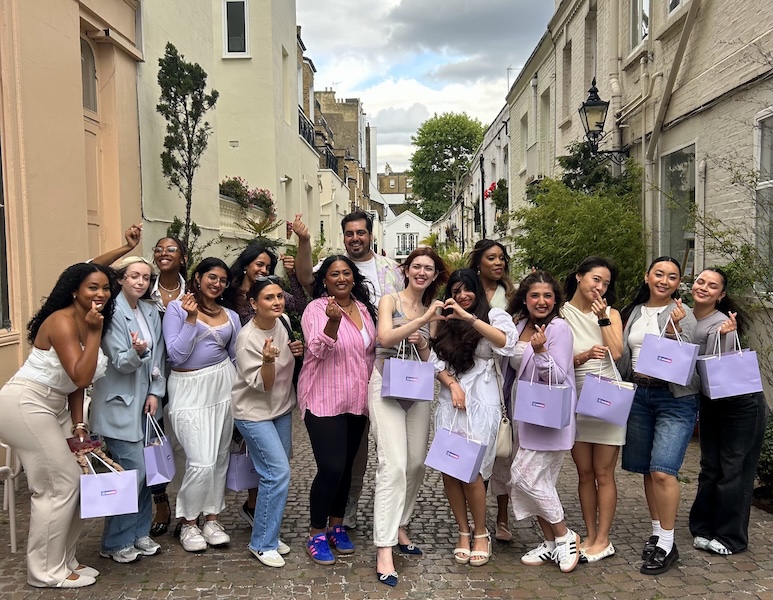
Hannah: Because influencer marketing is evolving. With so much competition, authentic relationships are more valuable than ever. Offline experiences don’t stay offline; if they’re good enough, they go viral.
Many attendees tell me they’d seen a brand online but only connected with it after experiencing it in person and hearing the story.
Q: What has been your favorite event so far?
Hannah: The first community event. It was the first time I really shared my vision publicly. It was scary, but people were so supportive. Two attendees even became close friends after meeting there. Seeing those connections form was incredible.
Q: Speaking of education, are you planning workshops for the general public?
Hannah: Yes, I’d love to. Many people buy products but don’t know how to use them. At one event, an influencer admitted they’d been gifted a bean essence – the vegan version of snail mucin – but had no idea how to use it. After I explained, they were excited to finally try it.
That really showed me how valuable education can be.
Personal Skincare and K-Beauty Trends
Q: Let’s switch to your personal routine. Are you more into the famous 10-step K-skincare approach or minimalism?
Hannah: I’m closer to the 10-step routine. Growing up with bad skin, I used harsh products like witch hazel and tea tree oil, which damaged my skin barrier. Now I see skincare as self-care. Taking time to layer toner, serums, and moisturizer is just for me.
Sometimes I wonder about trying non-Korean products, just to compare, but it’s been over 10 years since I used anything else. My mum also switched entirely to K-beauty and loves it. Once you see the results, there’s really no going back.
Q: If you could instantly bring one K-beauty product or trend to the UK, what would it be?
Hannah: Skincare balms, like the Kahi balm. They’re multifunctional; great for dry patches, on-the-go use, or even minimal routines. In Korea, everyone carries them, but in the UK, they haven’t been pushed much yet.
Q: Are you a fan of K-pop and K-dramas as well?
Hannah: Yes! I’m an OG fan. My first drama was Sungkyunkwan Scandal, and I loved DBSK when they still had five members. I haven’t watched much recently, though, so I need recommendations.
Advice for Entrepreneurs
Q: Finally, what advice would you give to someone wanting to start an intercultural business like yours?
Hannah: Take time to understand the business culture of the country you’re working with. Don’t go in with rigid expectations.
And most importantly, enjoy what you do. If you love it, you’ll put your heart into it, and that makes all the difference.
As K-beauty continues to capture attention in the UK, WONHWA is proving that success comes from more than just great products, it’s about creating genuine connections and sharing the stories behind them. With her passion for Korean beauty and commitment to building bridges across cultures, Hannah is helping more people discover not only the effectiveness of K-beauty, but also the joy and care it represents.
Key Takeaways
- WONHWA is a UK-based platform connecting Korean beauty brands with local influencers and consumers
- Founded by Hannah Kemper in 2025 after years of experience in Korea’s beauty industry and a Master’s in digital marketing
- Mission: build authentic connections through education, offline events, and storytelling, making K-beauty more accessible across the UK
- Works with both established and emerging brands, guiding them on market entry, branding, and cultural adaptation
- The UK market for K-beauty has grown 400% in the past five years, creating strong opportunities for expansion
Company Snapshot
| Name | WONHWA |
| Tag Line | “Connecting the best K-beauty brands to the best UK influencers” |
| Founded | 2025 (soft launch early this year) |
| Headquarters | Manchester, UK |
| Founder / CEO | Hannah Kemper |
| Mission | To authentically connect Korean beauty brands with UK influencers and consumers through meaningful storytelling, education, and in-person experiences. |
| Services | Influencer-brand matchmaking, offline pop-up events & workshops, localized marketing strategies, social media management & content services, without retail constraints. |
| Market Focus | Scaling across the UK beyond London, with future plans for expansion into broader European and possibly Canadian markets. |
| Unique Selling Point | Independent model, not tied to any single retailer, provides flexibility and authentic brand representation. Focus on brand/product education for deeper understanding and brand advocacy. |
| https://www.linkedin.com/company/wonhwa/ |
Join us on an exciting journey to explore the vibrant world of Korean lifestyle – from the latest beauty tips to the hottest tech and so much more on Facebook, Twitter, LinkedIn, and Flipboard.