
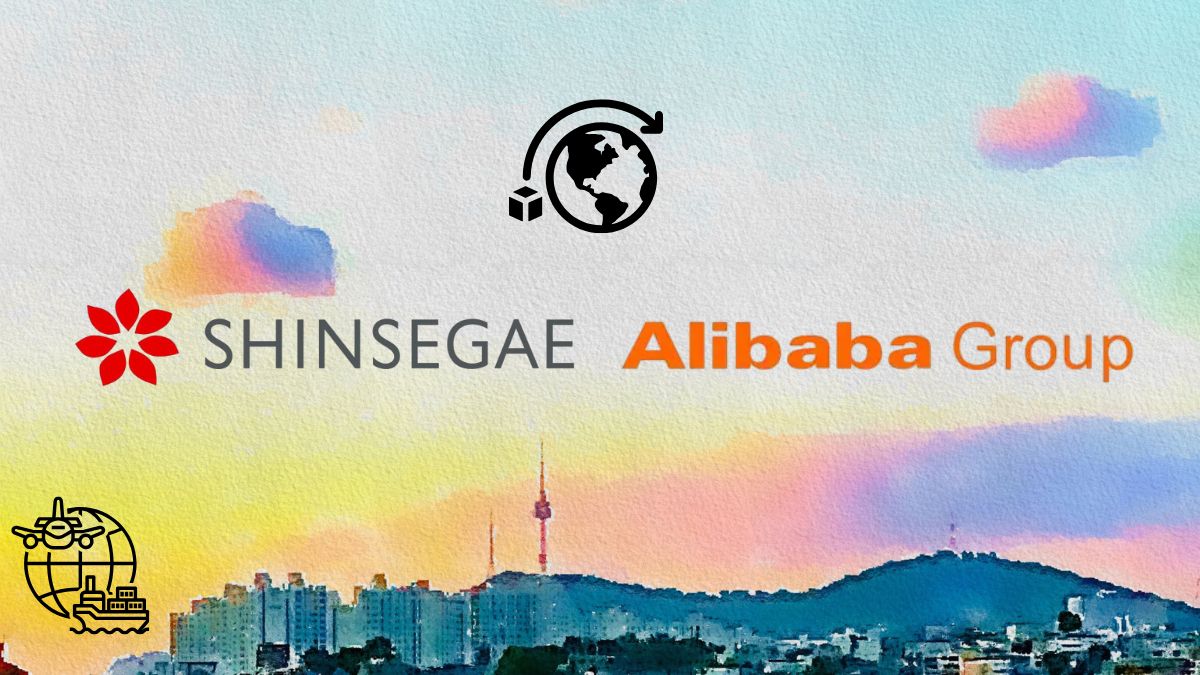
Shinsegae and Alibaba January 2026 MOU aims for ₩1 trillion in cross-border sales, signaling a structural shift in how Korean products reach global markets.
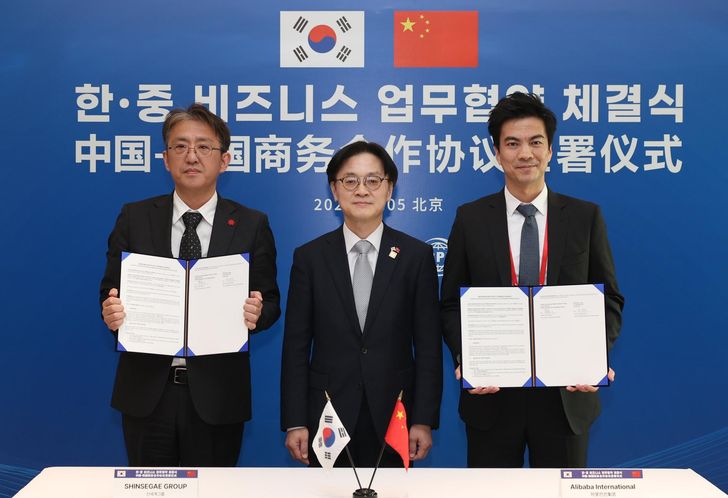
When Shinsegae Group and Alibaba International signed a memorandum of understanding (MOU) in January 2026 to expand global sales of Korean products, the announcement was easy to dismiss as another cross-border e-commerce partnership. It is not. This agreement reflects a deeper shift in how Korean products—particularly those from small and mid-sized companies—are being positioned in the global retail system.
The Shinsegae Alibaba MOU Deal in Brief — and the Number That Matters
Shinsegae Group and Alibaba International signed an MOU in January 2026 to expand the global sales of Korean products through Alibaba’s international e-commerce platforms, including Daraz (South Asia) and Miravia (Southern Europe).
At its core, the MOU is about scale and control.
The headline target:
₩1 trillion (≈ USD 690 million) in annual cross-border transaction volume within five years.
That number matters because it places the partnership well beyond pilot-stage cooperation and into the realm of export infrastructure.
For context, Korea’s total cross-border e-commerce exports reached an estimated ₩2.5 trillion in 2024, growing at roughly 18% year-on-year. If Shinsegae and Alibaba reach their stated goal, this single partnership could represent close to 40% of Korea’s current cross-border e-commerce export volume. In other words, this is not just about selling more Korean products overseas—it is about reorganizing how those products move.
Why Alibaba—and Why These Markets
Unlike Alibaba’s China-focused platforms, Alibaba International operates across more than 200 countries and regions, with a particular strength in emerging and mid-growth markets. The MOU specifically highlights platforms such as Daraz, which operates across South Asia, and Miravia, which serves Southern Europe, including Spain and Portugal.
These markets share two critical characteristics: e-commerce penetration remains relatively low, often below 20%, while annual online retail growth rates frequently exceed 20–25%. For Korean brands facing saturation in the U.S., China, and parts of Southeast Asia, this represents a strategic pivot rather than a marginal expansion.
The New Silk Road
Shinsegae × Alibaba Global Commerce Strategic Pipeline
Phase 1: Southeast Asia
1.2M products integrated across 5 key nations.
LAZADAPhase 2: South Asia Pivot
Expansion into Pakistan, Bangladesh, and Sri Lanka.
DARAZPhase 3: European Corridor
Beachhead in Spain and Portugal (EU Market).
MIRAVIAPhase 4: Global Network
Final integration into 200+ regions via AIDC network.
ALIBABA INTERNATIONALThe significance lies not only in geographic reach but in platform maturity. Alibaba International already provides localized logistics, payments, and AI-driven seller tools—capabilities that Korean exporters typically struggle to build on their own. This reduces both cost and execution risk for companies entering unfamiliar markets.
Shinsegae’s Role: From Retailer to Export Infrastructure
Perhaps the most important aspect of the deal is Shinsegae’s evolving role. Traditionally known as a domestic retail powerhouse, Shinsegae is positioning itself as an export coordinator rather than a direct seller.
Under the MOU, Shinsegae will identify export-ready Korean products, recruit domestic manufacturers and brands, and provide strategic support around product selection and market fit. Alibaba supplies the platform, traffic, logistics, and localization tools, including AI-based translation and image adaptation.
This structure directly addresses the three most commonly cited barriers for Korean SMEs expanding overseas: high localization costs, complex platform onboarding, and logistical uncertainty. By centralizing these functions, Shinsegae and Alibaba are effectively lowering the minimum scale required to export.
The Bigger Signal: Policy, Platforms, and Power
The partnership also aligns with Korea’s broader policy direction. As traditional export channels face rising costs and geopolitical friction, the government has increasingly emphasized digital exports and platform-based trade, particularly for SMEs.
At the same time, global retail power is consolidating around platforms rather than brands. In many emerging markets, platforms control customer access, pricing visibility, and fulfillment speed.
By embedding Korean products directly into Alibaba’s ecosystem, Shinsegae is effectively outsourcing distribution risk while preserving brand ownership. This is a model increasingly favored by export-oriented economies.
What Comes Next
If successful, the Shinsegae–Alibaba MOU could serve as a template for future platform-led export strategies. The real test will be execution: which product categories are prioritized, how much consumer data is shared with sellers, and whether participating brands can eventually build independent global presence rather than remaining platform-dependent.
What is clear already is this: the agreement is less about promotion and more about plumbing. And in global trade, plumbing often matters more than headlines.
Join us on an exciting journey to explore the vibrant world of Korean lifestyle – from the latest beauty tips to the hottest tech and so much more on Facebook, Twitter, LinkedIn, and Flipboard.