
K-Food exports are hitting record levels. Explore the data, key growth drivers, and what Korea’s export model reveals about global food trade.
South Korea’s food exports are on track to reach a record high in 2025, but the headline figure alone does not explain why this growth matters. Behind the numbers lies a broader shift in how food is produced, branded, and consumed globally — and Korea’s food industry is increasingly aligned with that shift.
Rather than being driven by a single trend or market, the current expansion reflects structural changes in consumer behavior, trade logistics, and the global appetite for standardized, export-ready food products.
Beyond the Record: Understanding the Scale of Growth
According to Korea Customs Service data, food exports totaled $10.4 billion between January and November 2025, a 7 percent increase year on year, placing total annual exports on track to exceed $10.7 billion, the previous record.
On the surface, this suggests steady growth. More importantly, the pace and consistency of exports throughout the year point to demand stability, not volatility. In a global environment where food supply chains remain exposed to inflation, climate pressures, and geopolitical friction, such stability is increasingly difficult to sustain.
Korea’s food export performance stands out not because it is explosive, but because it is predictable.
Why Processed Foods Dominate Korea’s Export Basket
Processed foods now account for 60.8 percent of Korea’s food exports, far outweighing raw agricultural goods. Fisheries products follow at 27.5 percent, while fresh or minimally processed items make up a comparatively small share.

This composition is not accidental. Processed foods offer several advantages in global trade:
- Longer shelf life and lower spoilage risk
- Easier compliance with international food safety standards
- Scalable manufacturing and pricing consistency
- Stronger brand identity across markets
Korea’s export model increasingly prioritizes repeatability and reliability, two qualities that global buyers value more than novelty alone.
Ramyeon and Seaweed: Familiar Products, Strategic Assets
The strongest growth in 2025 came from products that are already deeply embedded in international markets:
- Instant ramyeon exports rose 21.4 percent
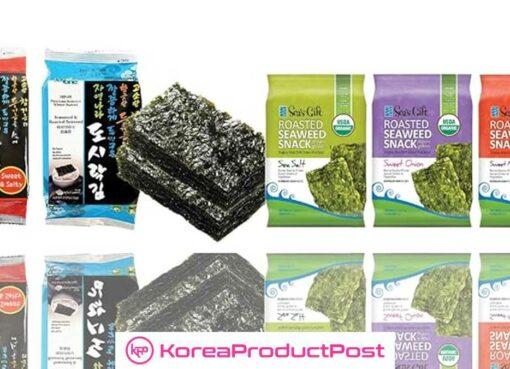
- Dried seaweed (gim) exports increased 13.3 percent
These products succeed not because they are new, but because they are adaptable. Ramyeon functions as a low-cost staple, a premium specialty item, or a cultural product depending on the market. Dried seaweed, once niche, now appears across cuisines as a snack, garnish, or health food.
Their growth illustrates a key point: export strength increasingly comes from versatility, not complexity.
The Geography of Demand Matters Less Than It Used To
Historically, Korea’s K-food exports have been concentrated in the United States, China, and Japan, which together account for roughly half of total shipments. These markets remain essential, but the current export structure reduces dependence on any single country.
Because processed foods are standardized and globally recognizable, distribution can scale more easily across regions. As a result, growth in emerging markets does not require fundamental changes in production — only incremental adjustments in packaging, certification, or branding.
This flexibility lowers risk and increases resilience in an increasingly fragmented global trade environment.
Trade Policy as Infrastructure, Not Promotion
One of the more understated developments supporting export growth is the Korea Customs Service’s plan to introduce new HS codes for high-volume items such as instant ramyeon. While technical in nature, this change has practical implications.
More precise classification improves:
- Trade data accuracy
- Customs processing efficiency
- Export cost predictability
Combined with stricter enforcement against misleading country-of-origin labeling, these measures protect the integrity of Korean food exports at a time when global imitation and private-label production are expanding.
Rather than acting as promotional tools, these policies function as export infrastructure.
What the Data Suggests About Korea’s Food Industry
The 2025 K-food exports point to a maturing industry that is less dependent on short-term cultural trends and more anchored in operational strength.
Key characteristics include:
- Emphasis on scalable, branded products
- Reduced exposure to supply chain shocks
- Alignment with global demand for convenience and consistency
This does not mean innovation is absent. Instead, innovation is increasingly applied to format, packaging, and market positioning, rather than reinventing products themselves.
A Signal, Not a Spike
Korea’s record-level food exports in 2025 is less like a milestone and more of a signal. The signal is that Korean food products are no longer competing primarily on cultural curiosity, but on the same fundamentals that define successful global food exporters: reliability, adaptability, and brand trust.
If these conditions hold, future growth may not be dramatic — but it is likely to be durable.
Why This Matters for Global Food Trade
As consumers worldwide shift toward convenient, standardized, and recognizable food options, countries that can deliver consistency at scale will continue to gain ground. Korea’s experience in 2025 offers a case study in how K-food exports evolve once novelty fades and fundamentals take over.
Join us on an exciting journey to explore the vibrant world of Korean lifestyle – from the latest beauty tips to the hottest tech and so much more on Facebook, Twitter, LinkedIn, and Flipboard.