
TL;DR
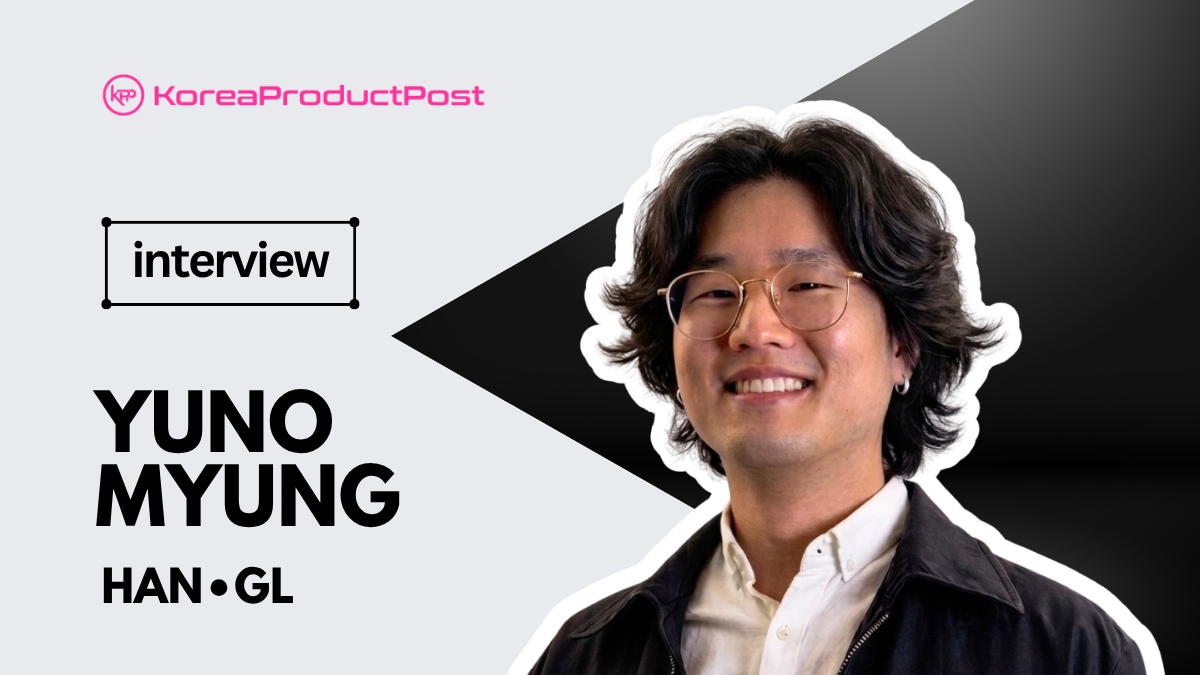
Yuno Myung, a Berlin-based founder with a background in UX and Product Management, has launched HAN•GL—an EdTech platform designed to turn learning the Korean alphabet into a narrative-driven experience. Moving away from the “data-dump” style of traditional apps, HAN•GL uses the history of King Sejong and the logic of physiological mouth shapes. Myung’s vision is to move beyond language, transforming the app into a “cultural gateway” supported by corporate partnerships and “learn-to-earn” incentives.
Key Insights:
- Narrative vs. Algorithm: HAN•GL rejects the “AI-first” rush, prioritizing pedagogical accuracy and historical storytelling to achieve a 13-minute average session and an 85% completion rate.
- The “Sound Box” UX: The app gamifies the physiological creation of sound—teaching the alphabet through mouth and tongue shapes—to make learning intuitive rather than rote.
- Underserved Market Signal: High organic traction in Spanish and Latin American markets identifies a massive, underserved global demand for non-English-centric K-content.
- The “Learn-to-Earn” Roadmap: Future growth relies on a “Cultural Ecosystem” where corporate partnerships (e.g., Bibigo, Olive Young) reward learners with real-world incentives.
- Strategic Reality Check: In the 2026 AI landscape, “Code is cheap.” Long-term value is found in brand storytelling, community trust, and rapid execution, not gatekept technology.
In the crowded landscape of language apps, most platforms treat the Korean alphabet, Hangul, as a hurdle to be cleared—a set of “sound-blocks” to be memorized through repetition. But for Yuno Myung, the founder of HAN•GL, the alphabet isn’t a hurdle; it’s the hero of a story.
Born in the US and now operating out of the vibrant tech hub of Berlin, Yuno’s journey from a New York insurance broker to a full-stack developer is as unconventional as the app he has built. Today, HAN•GL is carving out a unique niche in the EdTech space by blending 15th-century history with 21st-century UX design.
The Internal Conflict of the Diaspora
Having been born in the US and living in Berlin for nearly a decade, Yuno describes himself as someone who has lived abroad his whole life while constantly exploring his own relationship with his heritage. For a long time, he felt a sense of imposter syndrome, believing it was “not his place” to represent Korea because he was not “Korean Korean”—meaning he was not a native resident of the country. He felt “chains” that prevented him from taking a leading role in cultural representation.
The film K-Pop: Demon Hunters changed Yuno’s perspective because it was immediately clear to him that the creators were not from Korea, yet the project was a massive success. He found a deep connection with the film’s director, Maggie Kang, who admitted in interviews that she harbored the same fears: that she was “out of place” or that Koreans might not like her work. Her decision to proceed anyway, fueled by her “love for the culture,” inspired Yuno to “remove those chains” and imagine the possibility of honoring and representing Korean culture himself.
Authenticity Through a New Lens
Yuno’s current philosophy challenges the traditional idea of cultural authenticity. He posits that being “Korean in something else”—possessing a hybrid identity—can actually result in something “more authentically Korean” than what might be produced by someone living within the country. He argues that this outsider perspective allows for a unique understanding of how the rest of the world perceives Korea, which is invaluable for a global market.
The Gap in the Market: Why AI Isn’t Enough
While AI tools can translate text instantly, Yuno argues they lack quality regulation and accuracy in educational contexts. Despite the rise of LLMs (Large Language Models), Yuno is skeptical of the current “AI-first” rush in education. “Nobody is really regulating the quality of the output,” he notes.
He identified a significant gap in the market: the lack of “foreigner-friendly” apps that teach the Korean alphabet effectively. His research suggests a burgeoning demand driven by a generation of kids growing up with fond memories of Korean media, such as K-Pop: Demon Hunters, who want to identify with Korean values and culture.
Q. Why build a language learning app when AI can now translate almost anything instantly?
Yuno: I speak four languages—Korean, English, and Spanish fluently, plus conversational German—and I noticed that AI tools lack quality regulation. Their translations and lessons aren’t always accurate. I also realized there wasn’t a great app for teaching the Korean alphabet (Hangul) specifically.
Most competition provides a “cheat sheet” for memorization, but they ignore the pedagogy and the “why” behind the letters. I saw a gap for a foreigner-friendly app that was both accurate and engaging
Unlearning bad education is more costly than setting up a strong foundation in the beginning.
— Yuno Myung, Founder HAN•GL
Gamifying History: The King Sejong Narrative
A core pillar of the HAN•GL solution is its refusal to treat language as a sterile set of symbols. Instead, Yuno Myung has transformed the 15th-century origin story of the Korean alphabet into an immersive, gamified quest.
Historically, King Sejong the Great created Hangul specifically to empower the common people who struggled with complex Chinese characters. HAN•GL leans into this drama, positioning the learner as a participant in this historical shift.
Q. How did you end up putting the story of King Sejong in the app?
Yuno: Korean writing is the only writing in the world where we can attribute it to a creator. There’s a whole history behind it and a lot of drama that happened around it. I tried all these other apps, and they just give a cheat sheet and say, “Hey, just memorize this.” They don’t explain why it was created, who created it, or why he designed the letters the way they were designed. That, for me, is a very core component of education, but nobody was covering it.
“To differentiate myself from the competition, I thought it would be nice to introduce them to some Korean history that is not too dense. It helps understand the situation and why the letters are shaped the way they are, trying to logically piece together the shapes of the letters, and gives them a better way to make the educational content more sticky.”
— Yuno Myung, Founder HAN•GL
It was a strategic choice to make the app not just educational but also entertaining. Engagement depends on whether the user is engaged or gets value out of it, like education. If you achieve both, that usually ends up in good results.
What’s the App Like
It starts with the first 10 chapters for free. It teaches you all the letters. And then there’s a subscription-based model with vocabulary words and quizzes. Yuno plans to turn Korean words into little products, little collectibles that users can collect. Based on their collection, the app can help them study up on the words and build a personalized bank of Korean words.
- Narrative-Driven Progression: Rather than moving through “Level 1” or “Level 2,” users progress through chapters of a story. This framework provides a sense of purpose: users aren’t just memorizing; they are uncovering the “why” behind a king’s revolutionary vision.
- The “Logic of the Shape” Visualization: The app’s standout UX feature is the visual link between the character shapes and the human body.
- Engagement Metrics: This storytelling approach is the engine behind the app’s 85% lesson completion rate. By blending historical story with modern animations, HAN•GL maintains a session duration of 13 minutes.
- Collectible Mastery: To bridge the gap between history and long-term retention, the app treats vocabulary as “collectibles.” As users master words born from the alphabet they just learned, they build a personalized “digital bank,” turning linguistic progress into a tangible achievement.
Engagement Over Hype
While many startups chase vanity metrics like “total downloads,” Yuno focuses on retention and session depth. The data suggests his “Education + Entertainment” formula is working:
- Total Users: ~7,000 (100% Organic, $0 Ad Spend).
- Retention: 18% Day 1 retention, a high mark for a finite subject app.
- Session Duration: 13 minutes on average, significantly outperforming competitors like Duolingo.
- Completion Rate: 85% of users finish the lessons they start.
- User Sentiment: A 4.98-star average across 250+ reviews, with heavy traction in the Spanish and Latin American markets—a region Yuno identifies as “underserved” by existing English-centric tools
A Gateway to Culture
In the 2026 EdTech landscape, a standalone language app is often a “leaky bucket”—users learn a skill but have nowhere to apply it. Yuno’s roadmap for HAN•GL solves this by positioning the app as a frictionless gateway where linguistic mastery meets real-world utility.
Q. Since your app is built around a character, are you planning to expand it as a character IP, or is your focus right now the app?
Yuno: My experience has always been in B2C, and I have a big interest in branding and character designs. Even in my previous apps, you can see traces of how much I care about the personality of the apps I build. The character I created is something I’d like to expand on.
I intend to create a universe where we can have various characters and not just touch upon the King Sejong history, but also the history of Hangul’s survival through the centuries. Some kings wanted to eliminate it, and when Japan annexed Korea, they wanted to erase the Korean language.
Beyond the “Language App” Silo
Rather than stopping at the alphabet, Yuno envisions the platform evolving into a cultural ecosystem built on three strategic pillars.
Q. Two years from now, and your app is successful, how do you expect it to change the way a K-Pop: Demon Hunters fan in New York or London connects to Korea?
Yuno: What I’m trying to create now is the most frictionless gateway into Korean culture. It’s just something you look up on the app store, you download, and you start learning. They can start for free and don’t have to sign up. By the two-year point, I’m hoping to have enough word of mouth going around where people know this is the best way to get started. Hopefully, with that reputation, people come in and start learning.
At that point, I would like to have corporate partnerships. If I have lessons on Korean food, I can slap on a Bibigo logo and say, “sponsored by Bibigo.” I could also have K-beauty educational content where I go over different products or skincare routines. Maybe for completing the lessons, I could hand the users a coupon to Olive Young Global. We could help corporations with consumer education, promote new products, and give users an incentive to convert into customers. I’m hoping to not just be an educational platform but also partner up with government entities to reward people for actively learning Korean.
“If users are investing time to learn about the culture, what can the culture and the country do for them?”
— Yuno Myung, Founder HAN•GL
Advice for the AI Era: Execution is the Only Moat
In an era where AI can see and copy code instantly, he argues that the only true value lies in execution and sharing ideas openly.
For fellow EdTech founders, Yuno offers a sharp warning: “Code is getting cheaper every day. It is not the most valuable thing in your business.”
“Stop trying to gatekeep. Tell as many people as you can. Their feedback will save you months of time. Your ‘secret sauce’ isn’t the idea; it’s how you build it.”
— Yuno Myung, Founder HAN•GL
Speak about your ideas to get honest feedback on what you should and shouldn’t do. That feedback will shape the way you develop your business or maybe give you insights to not even start at all, which saves you months.
Company Snapshot
| Feature | Details |
| Company Name | HAN•GL |
| Founder | Kevin Yuno Myung |
| Founded | Late 2025 |
| Headquarters | Berlin, Germany |
| Core Product | Narrative-driven Korean Alphabet (Hangul) Learning App |
| Key Features | Physiological UI (mouth shapes), King Sejong Storytelling, Syllable Builder |
| Target Market | Global K-Culture fans with strong traction in Spanish/LATAM markets |
| User Base | ~7,000 Organic Users (as of April 2026) |
| Vision | A cultural gateway bridging language learning with corporate incentives |
| App Store | Available on iOS and Android |
| Website | https://hangl.app/ |
Join us on an exciting journey to explore the vibrant world of Korean lifestyle – from the latest beauty tips to the hottest tech and so much more on Facebook, Twitter, LinkedIn, and Flipboard.