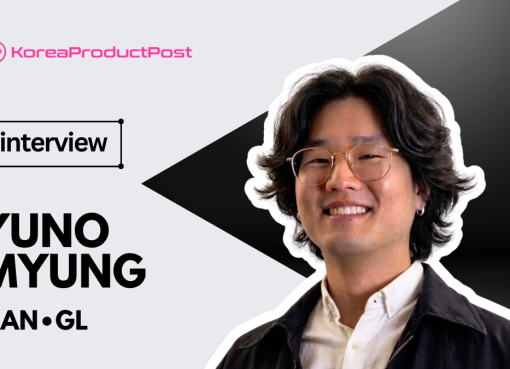


The global expansion of food concepts often stumbles on a single, organic variable: human dependency. While a single artisanal restaurant thrives on the intuition of its chef, scaling that same culinary magic across borders requires an entirely different playbook—one rooted in systems architecture, standardized workflows, and logistical precision.
In this exclusive interview, Wonhyung (Philip) Ju, Founder & CEO of Tasty Brothers Corp., breaks down how he is utilizing his background in enterprise systems consulting to transform traditional Korean “Jang” sauces into a highly scalable, “plug-and-play” franchise platform. Ju reveals the structural mechanics driving the international growth of their flagship brand, Jangsajang Deopbap. From navigating the sophisticated culinary landscape of Malaysia with a localized pork-free menu to stripping the capital expenditure (CapEx) out of traditional restaurant kitchen models.
The Operating System of Modern F&B
Traditional F&B models suffer from human dependency and operational instability at scale. By treating the franchise as a “platform” rather than just a brand, Tasty Brothers Corp. provides a structured operating system. This system combines standardized menu architecture, one-pack sauces, and simplified kitchen workflows. The goal is to lower the kitchen skill floor, protect restaurant margins, and ensure cross-border taste consistency.
Q. What was the first flaw you noticed in traditional F&B models that you made sure to fix when building Tasty Brothers Corp? You describe Tasty Brothers as a “platform” rather than just a brand; in practical terms, what does that infrastructure look like for a potential partner?
Wonhyung Ju: The first flaw I noticed in the traditional F&B model was that too much of the business depended on individual skill. In many restaurants, taste, speed, quality, and even profitability can change depending on who is in the kitchen that day. That makes it very difficult to scale.
“A great restaurant may work well as one store, but when it becomes ten, fifty, or a hundred stores, the operation often becomes unstable. When building Tasty Brothers Corp., I wanted to fix that structural weakness.”
When we call Tasty Brothers Corp. a platform, we do not mean it only in a digital sense. We mean that we provide the infrastructure that allows an F&B concept to be repeated, localized, and scaled. For a potential partner, the platform includes brand concept development. It also offers menu architecture. Standardized one-pack sauces are part of the package. Operational manuals are provided. Kitchen workflows are included. Training materials are available. This ensures stores can operate without relying too heavily on highly skilled chefs.
Our current flagship example is Jangsajang Deopbap, but the broader vision of Tasty Brothers Corp. is not limited to one rice bowl brand. We see our system as a scalable F&B platform that can support different menu categories, formats, and markets.
“So, our platform is not just a brand name. It is a full operating system for launching and scaling food concepts with consistent taste, simplified operations, and a clear brand identity.”
Q. Traditional kitchens are notoriously labor-intensive. How does your ‘one-pack’ system and digital workflow reduce the ‘skill floor’ for kitchen staff, and what specific “modern reinterpretations” did you apply to the rice-bowl format to make it “franchise-ready” in high-labor-cost markets?
Wonhyung Ju: Traditional kitchens require a high level of skill because many key decisions are made by the cook during service. Our one-pack system reduces that complexity. The most important flavor component is already standardized in the sauce, so kitchen staff does not need to recreate the taste from scratch every time. This lowers the skill floor significantly. New staff can be trained faster, stores can reduce operational mistakes, and the taste remains more consistent even with staff turnover.
Beyond the sauces, we reinterpreted our menu format into a strict operating system.
“Many traditional Korean dishes are difficult to scale globally because they require complex preparation, multiple components, and skilled kitchen execution. Our goal was to simplify that complexity into a repeatable and franchise-ready format.”
If each store cooks, plates, and controls portions differently, the customer experience becomes inconsistent. So we focused on making the format simple, repeatable, and scalable. We designed the menu structure around a clear base: rice, main protein, standardized sauce, toppings, and simple finishing.
We also simplified the plating process so it does not require highly skilled hands during peak hours. In high-labor-cost markets, this directly affects the franchisee’s bottom line by reducing training time, lowering dependency on expensive skilled labor, and protecting margins.
Supply Chain Insulation & Global Logistics
Global expansion introduces immense market inflation and supply chain risks. Tasty Brothers Corp. insulates franchisees by decoupling proprietary flavor components from commodity ingredients. They ship highly stable, fermented “Jang” sauces directly from Korea under optimized logistics models. This approach empowers international partners to source fresh components locally. It helps protect regional margins.
Q. How do you insulate your franchisees from the rising costs of raw ingredients and global logistics hurdles? For international expansion, have you optimized your ‘Jang’ sauces for shelf-stability or specialized cold-chain logistics to ensure an identical inventory experience globally?
Wonhyung Ju: We cannot eliminate raw material inflation or global logistics risk. But we can design the business model to reduce the impact. Our approach is to separate the core flavor components from the locally sourced ingredients. The most important part of the taste is controlled through our standardized one-pack sauces. Most other ingredients can be sourced locally, depending on the market.
Our sauces are based on Korean fermented Jang flavors, and this gives them a relatively strong advantage in terms of stability and shelf life compared to many fresh or highly perishable sauce products. Currently, we manage the core sauce quality from Korea and supply it to overseas partners under controlled conditions. We adjust the logistics method—chilled, frozen, or shelf-stable formats—to balance quality, cost, and operational efficiency.
“Our goal is to build a global supply structure where partners in markets like Kuala Lumpur, London, or New York can receive consistent product quality with predictable lead times and inventory planning.”
International Execution: The Malaysia Blueprint
Entering sophisticated F&B markets like Malaysia requires moving past cultural trends and adapting to local habits. By restructuring their menu into localized, halal-conscious, and pork-free categories, the brand successfully repositioned K-Food. They preserved their core sauce profiles. This shift transformed K-Food from an occasional novelty to a sustainable everyday meal staple.
Q. Malaysia is a sophisticated food market. What was the most surprising piece of feedback you received from Malaysian customers? How did you successfully navigate adapting to a “pork-free” model while maintaining the signature “savory joy” of your Jang sauces?
Wonhyung Ju: Malaysia taught us that customers can be very open to Korean food, but they are also very practical and sophisticated in how they choose everyday meals.
“The most interesting feedback was that customers did not simply want something that looked Korean or trendy. They responded better when the food felt Korean, but still familiar enough to eat regularly.”
When we entered Malaysia, we knew that simply removing pork from the menu would not be enough. Malaysia is a halal-conscious market. We used it as an opportunity to develop new localized menu categories. These include vegan-friendly tofu or mushroom deopbap. We also introduced K-Specials like chicken tower deopbap and Spanish mackerel deopbap. What made this possible was that the core flavor still came from our standardized special sauces.
“Malaysia helped us understand that global K-Food should not only be about being “exotic.” It should be Korean enough to be distinctive, but practical enough to become part of local dining habits.”
Future Horizons & The Asset-Light Horizon
Traditional brick-and-mortar expansion is frequently throttled by prohibitive real estate CapEx and intense equipment investments. By leveraging operational simplicity and standardization, Tasty Brothers Corp. builds highly compact, data-ready kitchen frameworks. This lays the groundwork for future algorithmic demand forecasting. It positions the enterprise to scale its internal flagship. It also diversifies concepts. Ultimately, it acts as a global systems incubator for smaller culinary brands.
Q. Most F&B expansion is slowed by heavy real estate and equipment costs. With your background in digital platforms, how is Tasty Brothers leveraging technology—such as AI-driven demand forecasting or automated “compact” kitchen units—to create a more “asset-light” investment model for your global partners?
Wonhyung Ju: Heavy real estate costs and kitchen equipment investment are two of the biggest barriers in F&B expansion. We try to design F&B not only as a restaurant, but as an operating model that can become lighter, standardized, and data-driven over time.
By standardizing the cooking process and portioning, we can operate in smaller and more efficient store formats. We are also moving toward a model that uses sales data, inventory data, ordering patterns, and menu performance to improve forecasting. AI-driven demand forecasting is a direction we are interested in, especially as we collect more data from different markets.
“For us, asset-light does not mean low-quality. It means designing the business so that capital is used more efficiently, while maintaining strong taste, brand identity, and operational consistency.”
Q. You mentioned being open to cross-border brand expansion. Does Tasty Brothers Corp. plan to act as an “incubator” for other smaller Korean brands? What other “Jang-based” categories or concepts are currently in your pipeline?
Wonhyung Ju: Yes, that is definitely one of the directions we are interested in for the future. In Korea, there are many small F&B brands with excellent taste, but to go overseas, a brand needs menu standardization, supply chain planning, training systems, and local adaptation. We try to look at F&B not only as food, but as a repeatable business system.
Our first expansion direction is to develop more Jang-based menu categories. Korean Jang flavors can work not only in rice bowls, but also in noodles, grilled dishes, ready-to-eat meal kits, and retail sauces. At the same time, we are also developing and operating other F&B concepts like other casual dining brands in Korea.
“At the moment, our main focus is to prove and scale our own flagship brand, Jangsajang Deopbap, and to strengthen our internal platform. So, I would not describe us as a full incubator yet. But our long-term ambition is very close to that…”
Q. The K-Food and fast-casual rice bowl market is highly saturated. If the Tasty Brothers operating system is truly a “plug-and-play,” what is the primary bottleneck preventing immediate, massive unit growth globally? Is it capital, supply chain localization, or partner execution?
Wonhyung Ju: I would say the biggest bottleneck is not capital alone. It is partner execution and market-by-market validation. Of course, capital is important for global expansion.
“In F&B, opening many stores quickly does not automatically mean building a strong brand. If the right partner, local team, supply structure, and operational discipline are not in place, fast expansion can actually damage the brand.”
Each market still has its own customer behavior, real estate conditions, labor environment, regulations, and supply chain realities. Before we grow aggressively, we need to make sure the model is properly localized and that the partner can execute it with consistency. For us, the goal is not just rapid unit growth. The goal is controlled and sustainable growth.
“So if I had to choose one bottleneck, I would say partner execution is the most important. Capital can accelerate growth, and supply chain localization can be solved step by step. But without the right partner and the right execution capability, the system cannot perform at its full potential.”
Company Snapshot
| Feature | Details |
| Company Name | Tasty Brothers Corp. |
| Founder & CEO | Wonhyung Ju |
| Headquarters | Seoul, South Korea |
| Founded | July 2020 |
| Flagship Brand | Jangsajang Deopbap |
| Core Product | Standardized, “one-pack” Korean fermented Jang sauces and modular F&B platform systems |
| Primary Markets | South Korea, Malaysia |
| Website | https://jangsajang.co.kr/ |
Join us on an exciting journey to explore the vibrant world of Korean lifestyle – from the latest beauty tips to the hottest tech and so much more on Facebook, Twitter, LinkedIn, and Flipboard.