
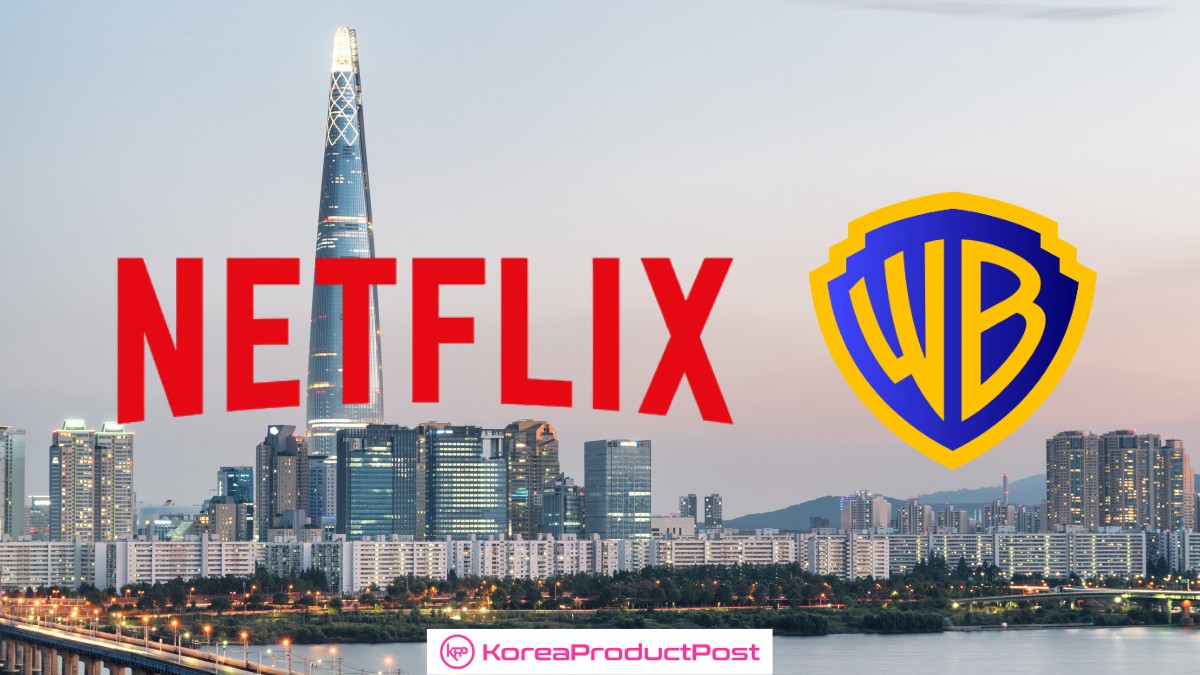
The Netflix – Warner Bros deal could reshape the streaming market in Korea, raising risks for local OTT platforms, content investment, and media policy.
Netflix’s proposed acquisition of Warner Bros. Discovery is more than a headline-grabbing global media deal. South Korea is one of the world’s most advanced and competitive streaming markets. While the deal is global in scope, its impact on Korea may be especially strong. It could permanently reshape the balance between global platforms and domestic OTT services.
South Korea is one of Netflix’s most mature and competitive markets. Domestic platforms already face intense pressure when it comes to competing with Netflix. A major consolidation like the Netflix-Warner Bros deal could widen the gap between global and local players in Korea.
While the deal remains subject to regulatory review and competing bids, its implications are already being debated across Korean content and policy. At the center of concern is a simple but critical question: can Korea sustain a competitive domestic OTT ecosystem as global platforms consolidate both content and distribution power?
Netflix’s Growing Power in Korea’s Streaming Market
Netflix is already the leading streaming platform in Korea. It holds a market share far above both global rivals and local services. Its success is fueled not only by scale and technology, but also by aggressive investment in Korean originals that helped globalize K-content.
Acquiring Warner Bros. Discovery would fundamentally change Netflix’s role in the ecosystem. The deal will bring Warner Bros. studios, HBO, and the Max content library under Netflix’s control.
For the Korean market, this would mean Netflix transitioning from a powerful distributor to a vertically integrated gatekeeper. It will end up controlling both must-have global IP and the dominant streaming platform. This shift would reduce Netflix’s reliance on third-party licensing and further widen the competitive gap with domestic OTT services.
How the Deal Affects Korean Streaming Platforms
Coupang Play Risks Losing Warner Bros. Content Advantage
Among Korean platforms, Coupang Play stands to be one of the most directly affected. Part of its appeal comes from access to Warner Bros. and HBO content. It has helped differentiate its offering from other local services and supported subscriber growth.

If Netflix were to absorb Warner Bros. Discovery in the deal, that advantage could quickly erode. Even if existing licensing agreements are honored in the short term, future deals are a question mark. It will be entirely subject to the strategic priorities of a vertically integrated Netflix. Over time, Coupang Play could face reduced access, higher licensing costs, or the loss of exclusivity altogether.
From a business perspective, this would raise customer acquisition and retention costs while weakening Coupang Play’s negotiating leverage. Strategically, it would force the platform to double down on capital-intensive alternatives such as sports rights, original content production, or aggressive pricing. All of these alternative streams carry margin and sustainability risks.
TVING Faces Higher Costs and Tougher Competition
TVING is becoming one of Korea’s most prominent domestic challengers. It is backed by strong local content, broadcaster partnerships, and steady subscriber growth. However, the Netflix-Warner deal would expose a structural vulnerability shared by many local platforms in Korea: scale without global IP leverage.
As Netflix consolidates premium international content under one roof, TVING’s ability to compete on breadth becomes increasingly constrained. The platform may be pushed to rely even more heavily on Korean originals as its primary differentiator.
While this strategy aligns with Korea’s cultural strengths, it is also costly. High-quality drama and variety production requires sustained capital investment. If it goes through, the number of viable buyers for such content could shrink if Netflix reallocates spending toward its newly acquired global franchises and other domestic platforms struggle financially.
For TVING, the strategic dilemma becomes sharper: continue absorbing losses to defend market share, pursue consolidation or alliances, or seek indirect policy and financial support to maintain competitiveness.
Wavve and Smaller OTTs Face Marginalization
For Wavve and other mid-tier or niche OTT services, the implications are more existential. These platforms already operate with limited financial headroom and depend heavily on broadcaster archives, local programming, or selective licensing deals.
A Netflix–Warner deal would further inflate the cost and scarcity of premium global content in Korea. It would effectively push smaller platforms out of the premium content segment of the market. Over time, this could push them into low-margin niches or quasi-public service roles, increasing the likelihood of mergers, restructurings, or market exits.
From an industry perspective, this points toward a winner-take-most market structure. One dominant global platform and a fragmented domestic tier are struggling to remain viable.
Impact on Korean Content Investment and Production
Netflix’s Capital Shift Could Reduce Local Investment
Netflix has played a major role in financing Korean content over the past decade. Its investments helped scale production budgets and global distribution for K-dramas and films.
However, a Warner Bros. acquisition could change Netflix’s spending priorities. Managing and monetizing major global franchises would require large, sustained capital commitments. This could limit how much Netflix allocates to Korean originals.
Even a modest shift in budget focus would matter. Netflix is one of the few buyers able to fund large, high-risk projects at scale. If its appetite for Korean content declines, producers may face fewer commissioning opportunities.
This would also reduce investment diversity. Fewer buyers mean more dependence on a smaller number of platforms. That increases risk for production companies and weakens their bargaining power.
Over time, Korea’s content ecosystem could become more fragile. The rapid expansion phase driven by multiple competing buyers may give way to tighter capital discipline.
Domestic Platforms Struggle to Fund Large-Scale Originals
Korean OTT platforms already face rising production costs. Talent fees, visual effects, and marketing budgets have increased sharply in recent years. At the same time, domestic platforms operate with limited scale. Unlike Netflix, they cannot spread costs across global subscriber bases. Losses are harder to absorb and harder to justify over the long term.
If Netflix strengthens its dominance through the Warner deal, the pressure on local platforms in Korea will grow. Subscriber growth may slow. Licensing revenue may decline. This leaves less room to invest in ambitious originals.
As a result, domestic platforms may shift toward safer, lower-budget projects. While this reduces financial risk, it also limits global competitiveness and creative experimentation.
The long-term concern is structural. Without strong local buyers able to fund premium content, Korea’s production industry may lose momentum.
Policy Challenges for Korea’s Streaming Market
Limits of Current Competition and Antitrust Rules
The Netflix-Warner Bros deal exposes gaps in existing competition frameworks in Korea. Traditional antitrust reviews focus on pricing, consumer harm, and market share. These tools may not fully capture the risks of content-driven markets. In streaming, control over intellectual property can be as powerful as control over distribution.
Vertical integration is a key issue. When one company owns both major content libraries and the dominant platform, competition can be weakened without obvious price increases.
Korean regulators may need to reassess how they evaluate market dominance in digital media. This includes considering content access, bargaining power, and long-term dependency.
Without updated frameworks, policy responses may lag behind market realities.
Balancing Global Platforms and Domestic Industry Growth
Korea has benefited from openness to global platforms. Netflix helped Korean content reach global audiences and raised production standards. At the same time, unchecked concentration carries risks. If domestic platforms weaken, Korea could lose control over key parts of its content value chain.
The policy challenge is balance. Overregulation could deter foreign investment. Underregulation could undermine local industry sustainability.
Possible approaches include targeted support for domestic platforms, fair licensing standards, or content investment obligations tied to market dominance.
The goal is not to block global players, but to ensure a competitive and resilient ecosystem. How Korea strikes this balance will shape the future of its streaming and content industries.
What Comes Next for Korea’s OTT Ecosystem
Whether or not the Netflix-Warner deal ultimately goes through, its potential impact has already exposed structural fragilities in Korea OTT market. For domestic platforms, the challenge is no longer just competing on content quality or user experience. It is also about surviving in an ecosystem increasingly shaped by global scale and ownership concentration.
For policymakers, the moment calls for strategic clarity: how to preserve competition, cultural vitality, and industrial sustainability without closing the door to global players that have helped propel Korean content onto the world stage.
The outcome of this debate may define the next phase of Korea’s digital media economy.
Join us on an exciting journey to explore the vibrant world of Korean lifestyle – from the latest beauty tips to the hottest tech and so much more on Facebook, Twitter, LinkedIn, and Flipboard.