
The golden era of K-beauty has brought more than just global prestige and record-breaking exports; it has painted a massive target on the back of Korean innovation. As of 2026, the South Korean government has officially transitioned from reactive measures to a permanent, aggressive “Ironclad Defense” strategy. The nation’s most powerful regulatory bodies are working together to dismantle the multi-million dollar counterfeit ecosystem.
On March 12, 2026, the Ministry of Food and Drug Safety (MFDS), the Korean Intellectual Property Office (KIPO), and the Korea Customs Service gathered at Nuri Dream Square to announce a unified front. This isn’t just about protecting corporate profits. It is a critical mission to ensure global consumer safety and maintain the astronomical growth of an industry that reached $11.43 billion in exports last year.
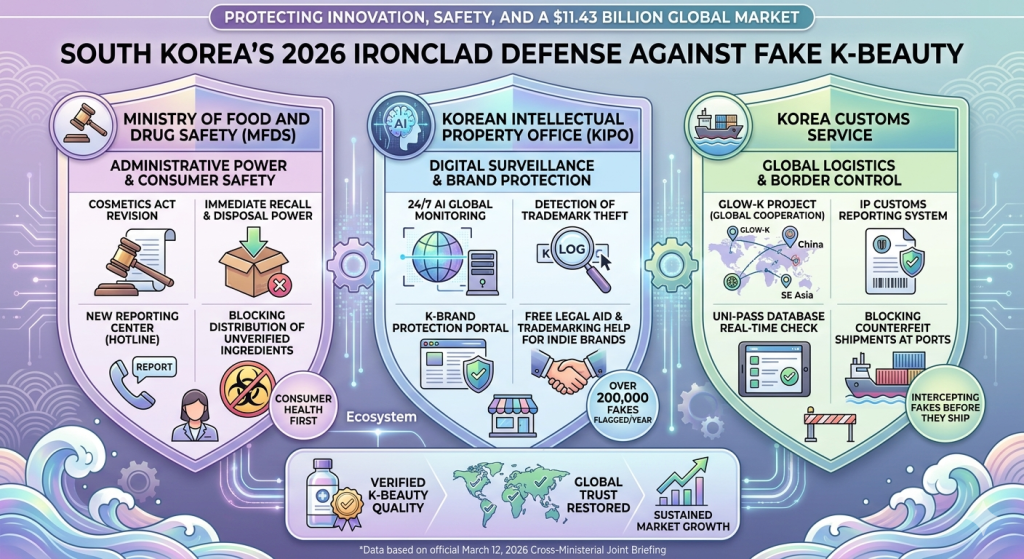
The Massive Financial and Safety Toll of Counterfeits
The scale of the problem has reached a breaking point. In 2025 alone, counterfeit cosmetics mimicking popular Korean brands accounted for an estimated $970 million (approximately 1.01 trillion won) in illicit distribution. These figures represent more than just lost revenue for brands; they represent a significant risk to the health of millions of consumers worldwide.
Fake cosmetics are frequently manufactured in unregulated facilities using industrial-grade dyes, heavy metals, and unverified chemical compounds that can cause permanent skin damage or severe allergic reactions. By framing this as a “Safety and Quality Competitiveness” issue, the Korean government is signaling that counterfeiters are no longer just patent infringers—they are a public health threat.
New Laws Give the Government “Teeth”
Historically, the government’s role in stopping fakes was often limited to administrative recommendations and slow-moving legal hurdles. Under the newly revised Cosmetics Act, the Ministry of Food and Drug Safety now has the power to act instantly.
If a product is confirmed as a counterfeit, authorities can now order an immediate recall and disposal of the inventory. This shift from “recommendation” to “enforcement” comes from the new Counterfeit Cosmetics Reporting Center, by the Korea Cosmetics Association. This center serves as a real-time intelligence hub where brands and consumers can flag suspicious products. It allows the MFDS to deploy rapid-response teams to block distribution before a fake product can even hit the domestic or international shelves.
Legal Enforcement
The Ministry of Food & Drug Safety now has the power for immediate product recall and disposal of confirmed fakes.
Law: Amended Cosmetics ActAI Surveillance
KIPO uses 24/7 AI monitoring to scan global e-commerce, detecting stolen trademarks and illegal listings instantly.
Metric: 200,000+ Flags/YearBorder Blockade
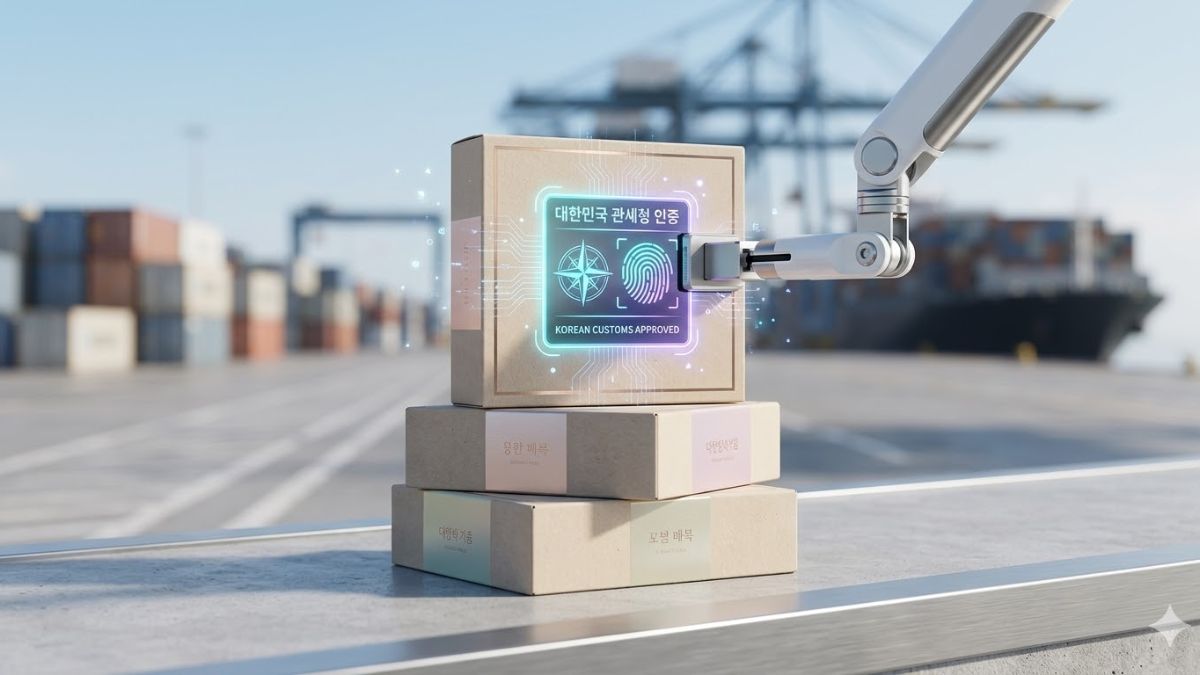
The GLOW-K project creates a global network to stop counterfeit shipments before they leave international ports.
System: UNI-PASS DatabaseAI-Driven Surveillance and the K-Brand Protection Portal
The battlefield for K-beauty has moved almost entirely online, and the government is fighting back with superior technology. The Korean Intellectual Property Office (KIPO) has deployed a sophisticated AI monitoring system that scans global e-commerce platforms 24/7. This system is currently detecting over 200,000 counterfeit listings per year. It identifies everything from trademark theft to unauthorized “pre-emptive” patent filings by overseas brokers.
To help smaller “indie” K-beauty brands—who often lack the legal budget of giants like Amorepacific—there is a K-Brand Protection Portal. This one-stop digital platform offers free legal consultations, trademark investigations, and direct links to local “IP-Desks” in major export markets. By providing this “shield” to small businesses, the government is ensuring that the next generation of Korean beauty innovators isn’t crushed by foreign copycats before they even find their footing.
The GLOW-K Project: Securing the Global Supply Chain
Perhaps the most ambitious part of this defense is the “GLOW-K” project by the Korea Customs Service. This initiative focuses on the physical movement of goods. Many fakes are made in one country but shipped through another to hide their origin.
Korea is now working with customs agents in China, Thailand, and Cambodia. By sharing intelligence and supply chain data with customs authorities, the Korea Customs Service can intercept shipments at the border. This project also introduces the Intellectual Property Customs Reporting System, allowing brands to register their trademarks directly with customs databases. When a shipment arrives, customs agents check it against the UNI-PASS database. If the paperwork doesn’t match, the goods stay at the border. It effectively chokes off the supply of fakes at the physical entry and exit points of the country.
Why This Permanent Shift is Essential for 2026
The sophistication of counterfeiters has evolved. Some sellers now use “clever delivery methods.” They often use fake domestic shipping labels to trick buyers. They want you to think the product is coming from Seoul when it’s actually coming from an illegal lab overseas.
The South Korean government is making these new defense systems permanent. They are moving away from temporary crackdowns. They want a constant state of high-alert. This ensures that the “Made in Korea” label remains a mark of luxury, safety, and trust. When you buy K-beauty, you deserve the real thing. Now, the government is making sure you get it.
Join us on an exciting journey to explore the vibrant world of Korean lifestyle – from the latest beauty tips to the hottest tech and so much more on Facebook, Twitter, LinkedIn, and Flipboard.