
The global beauty landscape in 2026 is no longer defined by the “10-step routine.” Instead, it is defined by high-efficacy, science-backed solutions that originate in South Korea. Recent financial disclosures from February 2026 reveal an industry that has not only recovered from the post-pandemic slump but has fundamentally evolved into a high-margin, tech-integrated powerhouse.
With Amorepacific returning to the 4 trillion won revenue club and APR nearly tripling its operating profit, the “K-Beauty Boom” has transitioned from a cultural trend into a permanent structural pillar of the global consumer goods market.
Growing Revenue of K-beauty Companies in 2026
| Brand/Sector | 2025 Revenue (KRW) | Growth (YoY) | Key Driver |
| Amorepacific | 4.25 Trillion | +9.5% | Western expansion & Derma brands |
| APR | 1.52 Trillion | +111.3% | Beauty Devices (Medicube) |
| Kolmar Korea | 2.72 Trillion | +11.0% | Indie brand ODM demand |
| SME Exports | $8.32 Billion | +21.5% | Global E-commerce (DTC) |
The New Giants: Amorepacific and the “America First” Strategy
Amorepacific’s 2025 performance, finalized in February 2026, serves as a masterclass in regional pivoting. Recording a revenue of 4.25 trillion won (approx. $2.95 billion), the group saw its operating profit surge by 52.3%.
The secret to this resurgence? A decisive shift away from over-reliance on the Greater China market toward the Americas and EMEA.
- The Laneige Factor: The “Lip Sleeping Mask” alone has hit a milestone of 20 million cumulative units sold, fueled by viral TikTok cycles that have turned the brand into a household name in North America.
- Derma-Focus: The full-scale global launch of Aestura (Amorepacific’s derma-skincare brand) has tapped into the 2026 consumer preference for “Science-Backed Skincare,” where clinical proof outweighs emotional storytelling.
APR and the Rise of “Beauty Tech”
Perhaps the most high-signal story of 2026 is APR. By recording a record-breaking operating profit of 365.3 billion won (a staggering 197.8% increase), APR has proved that the future of K-Beauty is hardware.
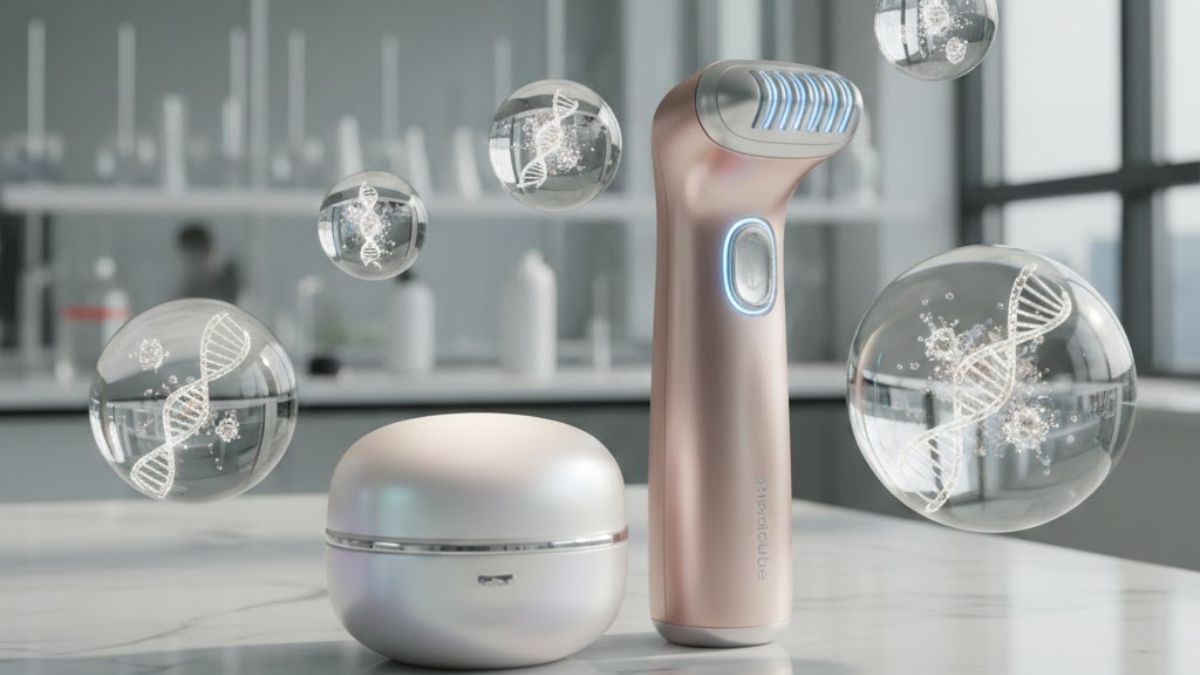
The company’s Medicube line has successfully carved out a new category: at-home clinical devices. Generating 407 billion won in sales from devices alone, APR has changed the unit economics of beauty. Unlike traditional liquids that require constant repurchasing, high-tech devices command premium price points and build long-term brand ecosystem loyalty. In 2025, APR’s overseas share grew from 55% to 80%, with the U.S. now accounting for 37% of their total business.
The ODM Revolution: How Kolmar and Cosmax Build Global Indie Brands
Behind every viral “K-Indie” brand—from Beauty of Joseon to Anua—is a sophisticated Original Design Manufacturing (ODM) infrastructure.
- Kolmar Korea (Revenue: 2.72T KRW) and Cosmax (Revenue: 2.39T KRW) have become the “silent architects” of the boom.
- The Win-Win Logic: Indie brands that lack internal R&D use these ODM giants to handle everything from formulation to regulatory compliance. In return, the ODMs benefit from the rapid, decentralized growth of thousands of small brands across platforms like Amazon and Shopee.
According to Kim Min-sang of Kolmar Korea, the demand for ODM services is shifting. It’s no longer about “making a cream”; it’s about “designing a concept.” In 2026, ODMs are pitching ready-to-market innovations featuring PDRN (salmon DNA) and Exosomes, allowing influencers and small entrepreneurs to launch high-science brands in months rather than years.
Strategic SME Exports: The $8.3 Billion Milestone
The South Korean government has played a significant role in this success. The Ministry of SMEs and Startups (MSS) reported that SME cosmetics exports reached an all-time high of $8.32 billion last year, a 21.5% increase.
To sustain this, the government has launched the “2026 K-Beauty Growth Ladder,” which includes:
- AI-Driven Customization: Five pilot projects launching in 2026 that pair AI startups with beauty brands to create hyper-personalized skincare based on genomic data.
- Regulatory Hubs: Designation of “Overseas Hub Embassies” to help SMEs navigate the increasingly complex FDA (US) and MoCRA regulations.
- Global Fulfillment: Doubling international shipping vouchers to mitigate the rising logistics costs in volatile regions like the Middle East.
The 2026 Trend Signal: Science Over Storytelling
In 2026, the “Why It Matters” for K-Beauty has shifted toward Bio-Active efficacy. Data points indicate that consumers in the US and Japan are moving away from multi-step routines toward “Skinimalism“—products that combine multiple functions into one high-tech bottle.
Skincare Efficiency Exchange
Analyzing the shift from Volume to Bio-active Potency
2016 Legacy 10 Steps
Result: High friction, ingredient overlap, increased irritation risk.
2026 Trend 3 Steps
Result: High-signal potency, skin barrier optimization, time efficiency.
- Top Ingredients: PDRN, Topical PLLA (Poly-L-Lactic Acid), and Plant-Based active proteins are the new “Gold Standards.”
- Scalp Care: The “skinification of hair” has led to a 7.4% CAGR in haircare, with K-Beauty essence formats moving from the face to the scalp.
Conclusion: The Multiformat Distribution of K-Beauty
The K-Beauty story in 2026 is no longer just a narrative of “good skin”; it is a narrative of technological dominance and economic resilience. As companies like APR and Amorepacific continue to break records, they are transforming from simple manufacturers into lifestyle technology companies.
For investors and global retailers, the signal is clear: K-Beauty has evolved. It is more clinical, more digital, and more profitable than ever before.
Join us on an exciting journey to explore the vibrant world of Korean lifestyle – from the latest beauty tips to the hottest tech and so much more on Facebook, Twitter, LinkedIn, and Flipboard.